


Introduction: Why Technical Failures Still Haunt Aviation
In an era where flight technology feels near futuristic, technical failures in aircraft engines still haunt aviation. From sudden pressure spikes and overheating to unnoticed component fatigue, these hidden issues don’t always reveal themselves during routine checks. The result? Increased fuel consumption, emergency rerouting, and serious safety risks.
Despite advanced engineering, aviation engines still face unpredictable issues—component fatigue, pressure fluctuations, overheating, and undetected leaks. These failures aren’t always caught during regular inspections. In-flight malfunctions not only risk passenger safety but drastically increase fuel consumption due to compensating thrust or emergency rerouting.
By integrating AI in aviation with IoT sensors directly into engine systems, airlines can now track critical parameters like temperature, vibration, and airflow in real-time. This powerful fusion allows for predictive alerts and intelligent, data-driven maintenance—before failures ever occur. With AI’s ability to process complex flight datasets and IoT’s ground-level monitoring, aircraft systems are becoming smarter, self-aware, and far more reliable. Through continuous Technology Gap Analysis, these advancements help identify missing capabilities—ensuring safer skies and optimized fuel consumption.
How AI and IoT Can Change the Aviation System
- Predictive Engine Monitoring: AI forecasts engine wear based on real-time sensor data, minimizing emergency landings.
- Flight Route Optimization: AI algorithms calculate wind patterns, turbulence, and optimal altitudes to reduce fuel burn.
- Smart Maintenance Scheduling: IoT sensors notify maintenance teams about component deterioration—reducing unnecessary part replacements.
- Fuel Flow Analysis: AI-powered fuel tracking identifies inefficient combustion cycles and helps optimize fuel injection in real time.
- Autonomous Diagnostics: Systems can now self-diagnose technical faults in mid-flight, alerting ground teams before failure occurs.
Benefits of Using AI and IoT in Aviation
- Reduces fuel consumption by 5–10% through smart flight path corrections.
- Increases engine life by predicting wear-and-tear before visible damage.
- Enables real-time diagnostics—reducing downtime and improving operational efficiency.
- Enhances in-flight safety with predictive alerts and failure detection.
- Helps meet sustainability goals by lowering emissions and reducing wasteful operations.
Why Do Engine Failures Still Happen in the Age of Tech?
Despite modern aviation’s sleek designs and high-tech dashboards, the core problem still lies deep within the engine systems—where aging sensors, manual routines, and blind spots can bring down even the most advanced aircraft.
The reality? Engine issues still catch airlines off guard, leading to grounded flights, emergency landings, and higher carbon emissions. Below are the critical challenges that continue to plague the aviation industry:
1. Undetected Engine Failures Still Risk In-Flight Safety
Conventional systems often fail to catch early-stage mechanical issues like component fatigue or micro-vibrations—leading to sudden engine malfunctions that jeopardize passenger safety and emergency rerouting.
2. Maintenance Is Still Reactive, Not Predictive
Scheduled inspections don’t adapt to real-time engine conditions. As a result, faults are found only after they cause visible damage—wasting both time and resources.
3. Fuel Management Systems Are Outdated and Inefficient
Without smart optimization, engines often operate below efficiency levels, consuming excess fuel—raising operational costs and increasing the aircraft’s environmental impact.
4. Ground-Only Diagnostics Slow Down Fixes
Real-time alerts are missing. Aircraft depend on post-landing manual inspections, which delays issue detection and leads to avoidable downtime and delayed departures.
5. Poor Communication Between Aircraft and Ground Crew
Engine data collected in flight is rarely analyzed until after landing, causing delays in diagnostics and misaligned maintenance decisions that affect fleet scheduling.
New-Age Innovations That Solve Aviation’s Technical Failures
The future of aviation lies in smarter, self-aware systems—and AI in aviation is leading the charge. From predicting failures to fixing them mid-flight, next-gen technologies are reshaping engine reliability and safety—while Patent Invalidity Analysis ensures innovations remain enforceable, unique, and free from prior art conflicts.
1. Digital Twin Technology
AI-powered digital twins create a real-time virtual replica of the engine, continuously simulating its internal conditions. These models help predict where cracks, heat stress, or friction will occur—so maintenance teams can intervene before failure strikes.
2. Edge AI Processors in Engines
No more waiting for ground diagnostics. Edge AI chips embedded directly in aircraft engines now process data on-board—detecting temperature spikes, pressure drops, or unusual vibrations in real-time and initiating corrective actions instantly.
3. Autonomous Micro Repair Bots
AI-driven microbots are being tested to crawl inside engines and locate microscopic faults like corrosion or structural fractures. They not only inspect but also assist in early-stage in-flight repair—cutting downtime dramatically.
4. Self-Optimizing Engine Systems
Using AI, modern engines can now adjust fuel-air mix, combustion pressure, and thrust output automatically based on altitude, humidity, and performance demand—ensuring top efficiency while lowering emissions mid-flight.
5. AI-Controlled Air Traffic Coordination
Flight routes are now being dynamically adjusted using AI-based air traffic management. This reduces mid-air circling, prevents congestion delays, and minimizes fuel waste—helping airlines save both time and carbon.
Real-Time Benefits in the Sustainability Era
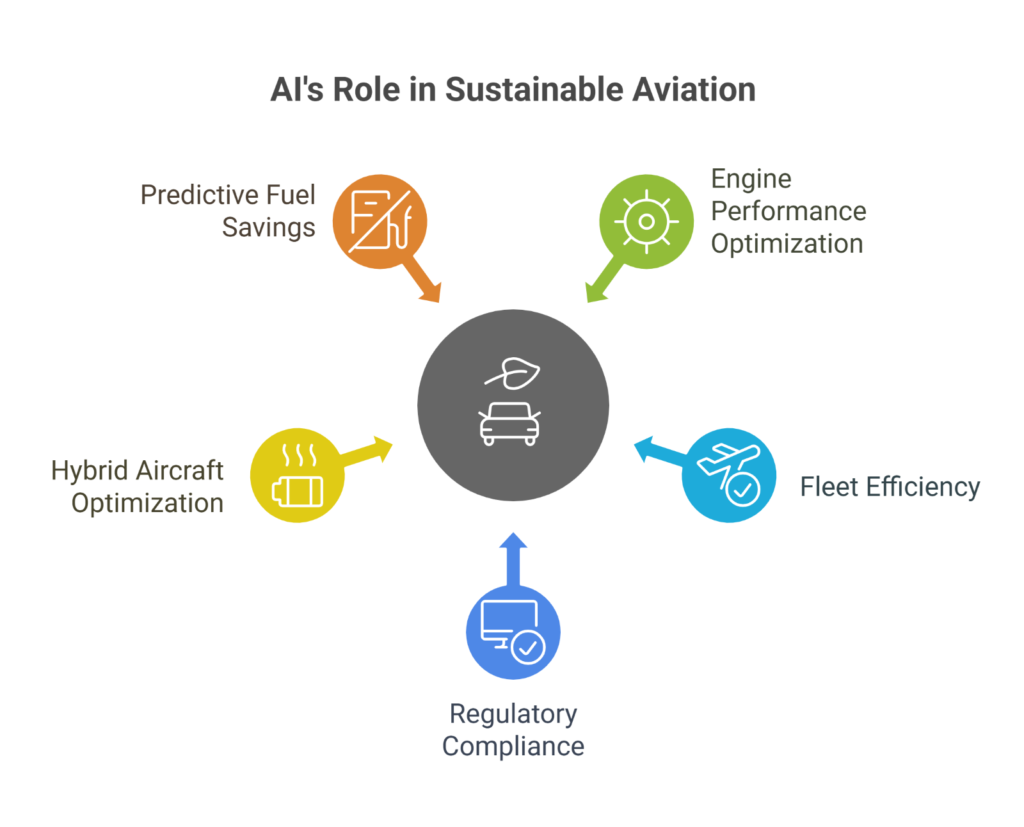
As global aviation faces mounting pressure to reduce its environmental footprint, AI in aviation—powered by real-time, intelligent systems and backed by ongoing market assessment and valuation— is enabling a smarter, greener, and more resilient industry. Here’s how AI will deliver measurable sustainability wins:
1. Lower CO₂ Emissions
AI fine-tunes engine performance using real-time flight data, reducing carbon emissions by up to 20% without compromising speed, safety, or efficiency.
2. Smarter Fleet Efficiency
AI detects underperforming aircraft, helping airlines phase out high-emission planes and plan sustainable fleet upgrades based on real-time fuel efficiency analytics.
3. Hassle-Free Regulatory Compliance
AI automates emissions monitoring and reporting, helping airlines meet global climate regulations, avoid penalties, and maintain strong environmental credentials with ease.
4. Hybrid Aircraft Optimization
AI balances energy use between fuel and renewables in hybrid-electric planes, boosting flight efficiency, cutting emissions, and extending range without system overload.
5. Predictive Fuel Savings
AI identifies engine faults early, avoiding in-flight rerouting or excess fuel burn—saving thousands of gallons annually across an airline’s operational fleet.
Market Insights: AI in Aerospace
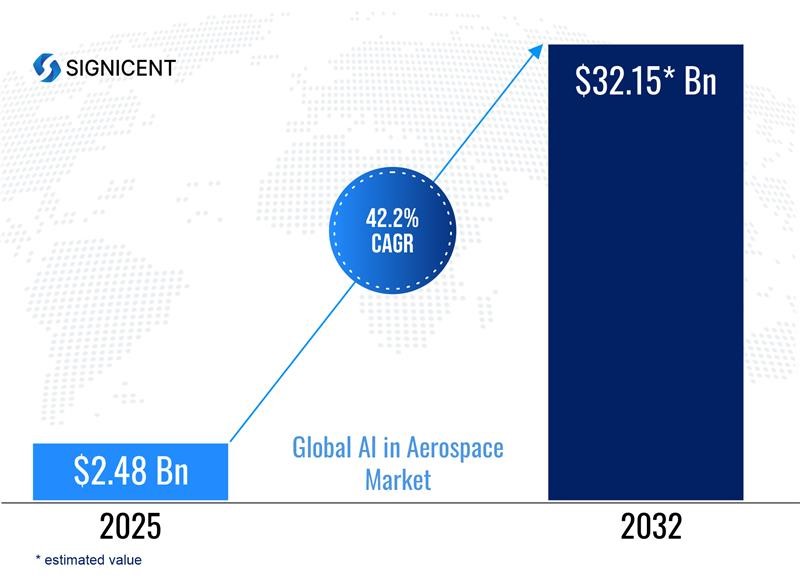
The market for AI in aviation is soaring as the industry pivots toward smarter, safer, and more sustainable operations. With growing pressure to reduce emissions, cut operational costs, and enhance passenger safety, airlines and OEMs are rapidly adopting AI-powered solutions for predictive maintenance, real-time diagnostics, and intelligent flight management.
According to Signicent’s Market Research, the global AI in aviation market is projected to grow at a CAGR of over 40% by 2030, fueled by advancements in IoT-enabled sensors, digital twin modeling, and edge AI processors embedded directly into aircraft systems. As aviation regulators tighten sustainability mandates, AI is emerging as a strategic enabler—helping companies stay competitive, compliant, and future-ready in the era of connected, autonomous flight.
Key Players Leading the AI-Aerospace Revolution

At Signicent, we’ve been working closely with clients across diverse sectors—from packaging and pharmaceuticals to electronics, semiconductors, and AI innovations. With sustainability becoming a top priority, especially AI in aviation, we understand how critical it is to shift from reactive maintenance to predictive intelligence. That’s why we help aerospace brands explore AI-integrated sensors, identify white spaces in predictive maintenance, and benchmark technologies that reduce emissions and enhance engine performance.
If you’re actively striving to cut fuel waste, prevent mid-air failures, or move toward carbon-neutral aviation goals, we’re here to support you. From white space analysis and technology scouting to sustainability mapping and IP strategy, our tailored insights help convert technical challenges into real-world, market-ready solutions. Let’s build the future of smarter, greener aviation—together.
Conclusion: Smarter Skies. Start with smarter systems
AI and IoT are no longer theoretical concepts; they are actively transforming the landscape of AI in aviation. From engine diagnostics to fuel optimization, these sophisticated technologies are enabling airlines to shift from reactive approaches to predictive strategies. This evolution minimizes downtime, reduces operational costs, and enhances both passenger safety and real-time fuel efficiency.
As global climate goals tighten and carbon regulations grow more demanding, adopting intelligent systems in AI in aviation is no longer optional—it’s a strategic necessity. At Signicent, we help aviation innovators navigate this shift by offering targeted technology scouting, deep patent insights, and sustainable R&D solutions. Together, we can build a future where flights are not just faster and safer, but also smarter, cleaner, and engineered for long-term sustainability.
About Signicent LLP
We assist businesses globally in their technology innovations, R&D, new product development, patents, valuation, product commercialization & market research needs.
Services Offered:
- Patent Landscape
- Patent Portfolio Analysis
- Patent Invalidity Search
- Patent Licensing Services
- Freedom to operate (FTO)
- Chemical Structure Search
- Design Patent Search
- Technology Scouting
- Technology Landscape Analysis
- Technology gap analysis
- Technology Intelligence
- Market Research
- Bio Sequence Search
Elevate your Innovation and Research with Signicent’s cutting-edge approach to assist you with Technology and Market related matters alongside the IP aspect of the analysis.