
Introduction
The world is facing a major food crisis as climate change, rising population, water scarcity, and environmental pollution continue to affect agriculture. Traditional farming methods are struggling to meet the growing food demand while also protecting the environment. Excessive use of chemical fertilizers, toxic pesticides, and poor farming practices are damaging soil quality and reducing nutritional value in fruits and vegetables. At the same time, food waste and supply chain disruptions are making the problem even more serious. This is where AI in Sustainable Agriculture is becoming a powerful solution for the future.
From smart farming and crop monitoring to climate prediction and food waste reduction, artificial intelligence is helping farmers improve productivity while supporting sustainable food systems. Leveraging Current & Future Analysis, organizations can better understand evolving agricultural trends, identify emerging opportunities, and adopt AI-powered technologies that drive smarter, safer, and more climate-resilient farming for future generations.
How AI in Sustainable Agriculture Can Tackle Present Toxic Farming
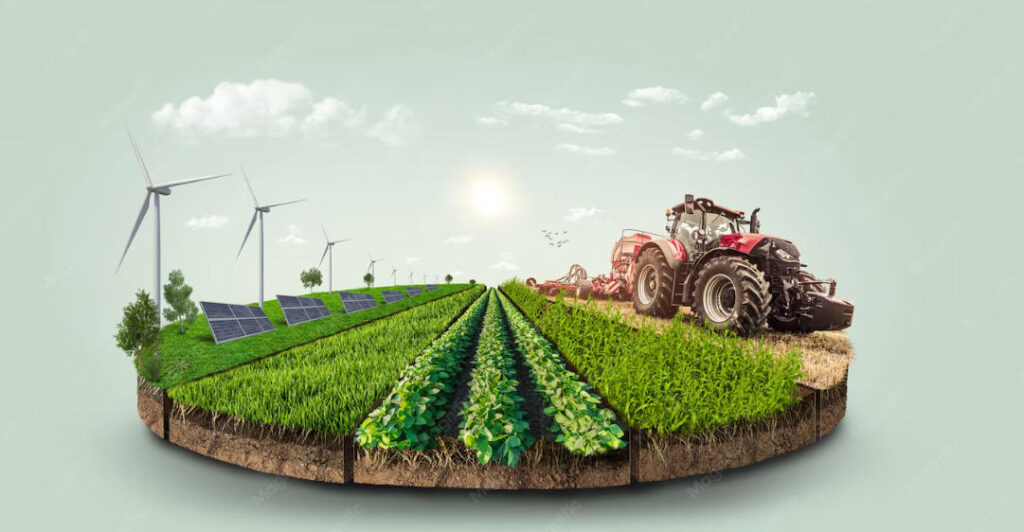
Modern agriculture has helped increase food production over the years. However, it has also created serious environmental and health-related problems. Excessive use of chemical fertilizers and pesticides has affected soil fertility, water quality, and human health. Many fruits and vegetables today are artificially enhanced using chemicals to improve appearance, size, and shelf life.
In many regions, vegetables lose their natural color and nutritional quality because of toxic farming practices. Farmers often depend heavily on synthetic chemicals to protect crops from pests and diseases. While this may increase short-term production, it creates long-term damage to ecosystems and biodiversity.
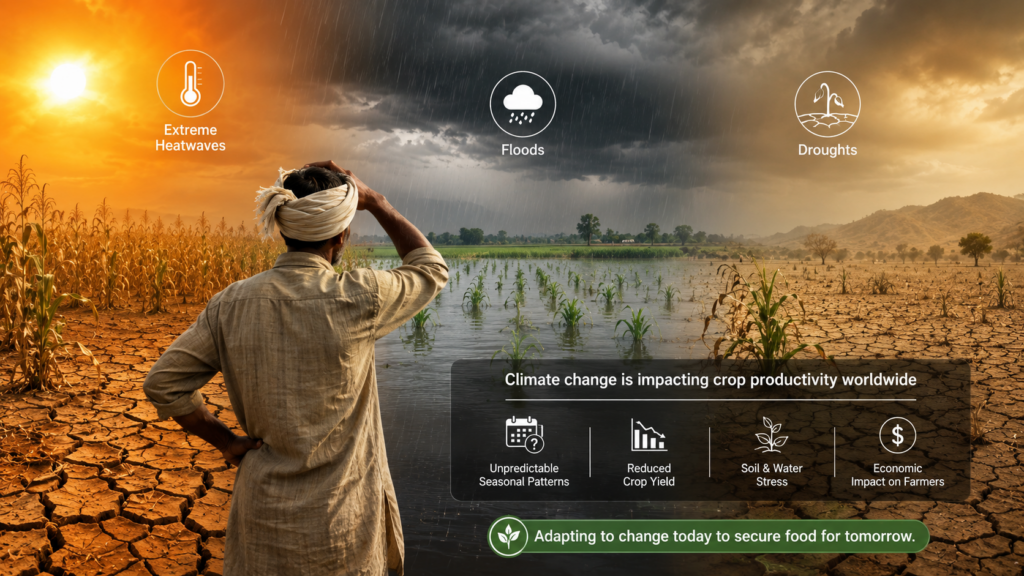
Another major challenge is global warming. Rising temperatures, irregular rainfall, droughts, and floods are making farming increasingly unpredictable. Traditional farming systems are unable to respond quickly to these climate changes.
This is where AI-powered farming technologies are becoming highly valuable. Artificial intelligence can help farmers monitor soil health, identify crop diseases early, and reduce unnecessary chemical usage. AI systems can analyze real-time farm data and recommend sustainable solutions that improve both crop quality and environmental safety.
Smart agriculture tools are also helping farmers shift toward organic and precision farming methods. Instead of applying chemicals across entire fields, AI can identify specific problem areas and suggest targeted treatment. This reduces chemical waste and protects soil fertility over time.
Why Food Security Matters in the Modern World
Food security is becoming one of the biggest global concerns. Millions of people around the world still face hunger and malnutrition despite technological advancements. Climate disasters, supply chain disruptions, wars, and inflation continue to affect food availability and prices.
Drought conditions are reducing crop yields in many countries. Water shortages are also making farming more difficult. At the same time, population growth is increasing pressure on food production systems.
Food insecurity does not only affect developing nations. Even advanced economies experience disruptions in food supply chains during extreme weather events or economic crises. Rising food prices make nutritious food inaccessible for many families.
AI in sustainable agriculture can improve food security by helping farmers produce more food with fewer resources. AI-driven farming systems can predict weather patterns, monitor crop health, and optimize irrigation. These technologies reduce farming risks and improve agricultural efficiency.
AI-powered Supply Chain Analysis helps governments and organizations forecast potential food shortages before they occur. By identifying supply chain risks, optimizing distribution networks, and improving demand forecasting, organizations can respond more quickly, reduce food waste, and enhance overall food security.
Major Drawbacks of Present Agriculture Systems
Today’s farming systems face several environmental and social challenges that threaten long-term sustainability.
Global Warming and Climate Pressure
Extreme heatwaves, floods, and droughts are affecting crop productivity worldwide. Climate change has made seasonal farming patterns less predictable, increasing uncertainty for farmers.
Toxic Fertilizers and Pesticides
Heavy dependence on chemical fertilizers is damaging soil quality and polluting groundwater. Toxic pesticides also affect human health and biodiversity.
Declining Nutritional Quality
Many vegetables and fruits today contain lower nutritional value due to excessive chemical use and poor soil health. Artificial ripening methods also reduce food quality.
Water Scarcity
Traditional irrigation systems waste massive amounts of water. Agriculture already consumes a large share of global freshwater resources.
Food Waste
Large amounts of food are wasted during transportation, storage, and retail processes. Poor inventory management increases losses across supply chains. These problems highlight the urgent need for sustainable farming innovations powered by AI technologies.
New Age AI Techniques Can Support Organic Farming
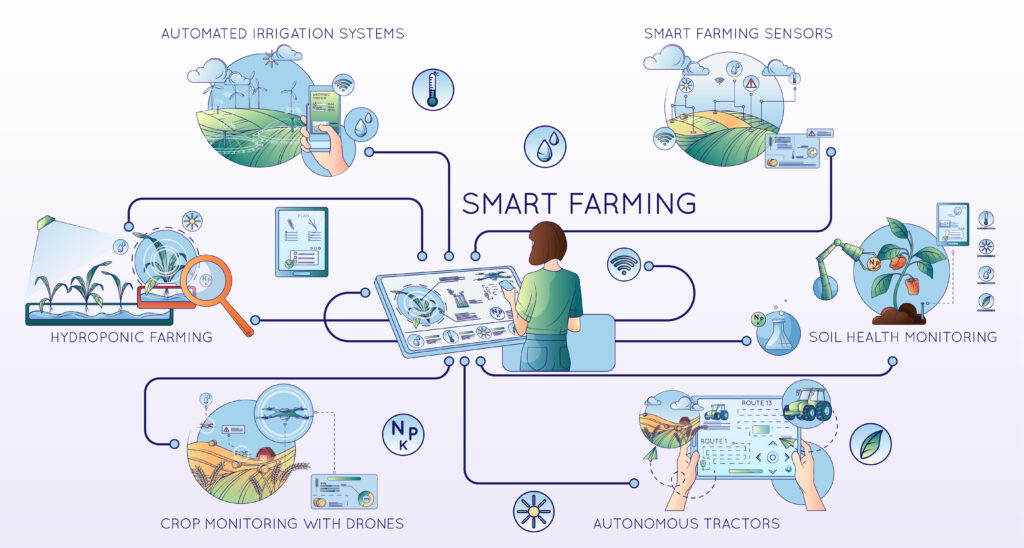
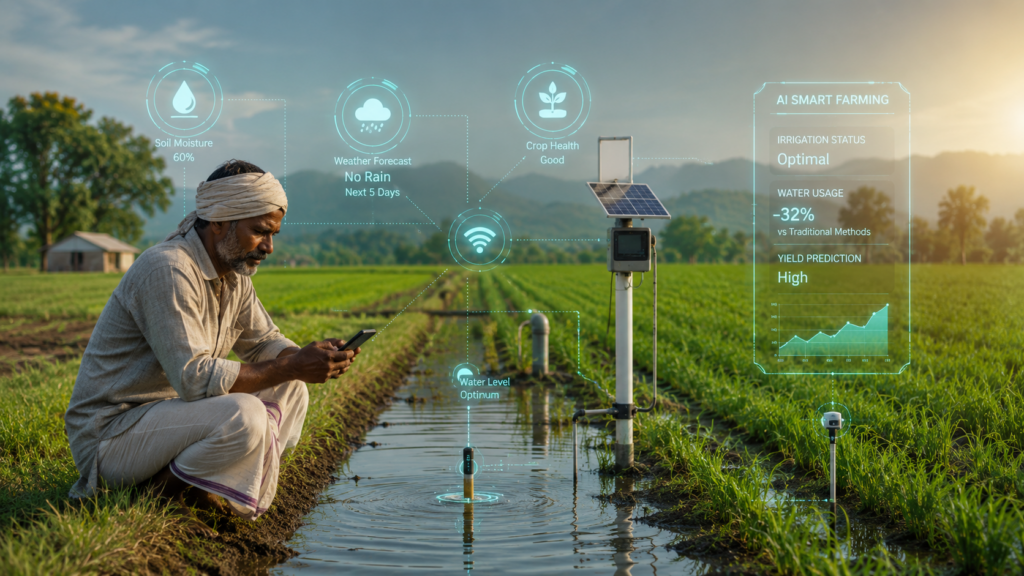
Artificial intelligence is introducing smarter farming practices that support environmental sustainability and organic agriculture. AI-powered sensors can monitor soil moisture, nutrient levels, and crop health in real time. Farmers can then make data-driven decisions instead of relying on excessive chemical treatments.
Precision agriculture uses AI and satellite monitoring to optimize irrigation and fertilizer usage. This reduces waste while improving crop productivity. Computer vision systems can detect pests and diseases early using drone imaging and smart cameras. Farmers can apply natural treatments only where needed instead of spraying entire fields.
AI-driven robots are also helping automate weed removal without harmful herbicides. These technologies support cleaner farming practices and healthier food production. In the future, AI may help scale organic farming by making sustainable methods more efficient and affordable for farmers worldwide.

AI for Sustainable Nutrition
Nutrition is another critical part of sustainable food systems. Many communities still lack access to healthy and nutritious food. AI technologies can improve nutrition accessibility by optimizing food distribution systems and reducing supply chain inefficiencies. Smart analytics can identify regions facing nutritional shortages and help governments allocate resources more effectively.
AI-powered nutrition platforms can also support personalized diet planning based on health conditions and dietary needs. These systems may help reduce nutrient deficiencies and improve public health outcomes.
In agriculture, AI can help farmers grow more nutrient-rich crops by analyzing soil quality and environmental conditions, creating healthier food systems while supporting sustainable nutrition goals. Signicent’s Competitor Patent Analysis further helps businesses understand the evolving patent landscape, monitor competitor innovations, and make informed R&D and IP strategy decisions.
Reducing Food Waste with AI
Food waste remains one of the biggest challenges in global food systems. Millions of tons of food are wasted every year while many people continue to suffer from hunger. AI can reduce food waste through smarter demand forecasting and inventory management. Retailers and supermarkets can use AI systems to predict customer demand more accurately, reducing overstocking and spoilage.
AI-powered cold chain monitoring systems can also improve food storage and transportation. These technologies help maintain proper temperature conditions, preventing food spoilage during transit.
Restaurants and food delivery platforms are increasingly using AI analytics to optimize supply and reduce waste. Smart packaging technologies can also monitor food freshness in real time. Reducing food waste not only improves food security but also lowers greenhouse gas emissions linked to food disposal.
Climate-Resilient Farming with AI Technologies
Climate-resilient farming is becoming essential for future agriculture. AI technologies can help farmers adapt to changing environmental conditions more effectively. AI-based weather prediction systems provide real-time climate insights that help farmers plan irrigation, planting, and harvesting schedules more efficiently.
Satellite monitoring and remote sensing technologies can identify drought risks, flood-prone areas, and soil degradation patterns. Farmers can then take preventive action before major crop losses occur. AI can also support resilient crop selection by analyzing which crop varieties perform best under specific climate conditions. This improves long-term agricultural sustainability.
As climate change continues to affect global food production, Technology Monitoring enables organizations to track emerging AI-driven farming innovations, helping them adopt smarter solutions that strengthen food systems and improve climate resilience.
Benefits of AI in Sustainable Agriculture
AI is creating multiple benefits across agriculture and food systems.
Improved Crop Productivity
AI helps farmers make better decisions using real-time data and predictive analytics.
Reduced Chemical Usage
Precision farming reduces unnecessary fertilizer and pesticide application.
Water Conservation
Smart irrigation systems optimize water usage and reduce waste.
Better Food Quality
AI supports healthier crop production and improved nutritional value.
Lower Food Waste
AI improves supply chain efficiency and inventory management.
Climate Adaptation
AI technologies help farmers respond to changing environmental conditions.
These benefits make AI one of the most promising technologies for sustainable agriculture.
Market Research and Industry Growth
The global smart agriculture market is growing rapidly as governments and businesses invest in sustainable farming technologies. Increasing concerns about food security, climate change, and environmental sustainability are driving demand for AI-powered agriculture solutions.
Many agricultural startups are developing AI tools for crop monitoring, robotic farming, and precision agriculture. Large technology companies are also investing heavily in agricultural innovation.
Experts predict that AI-driven farming technologies will become a major part of future food systems as countries focus on sustainable development goals and climate resilience strategies.
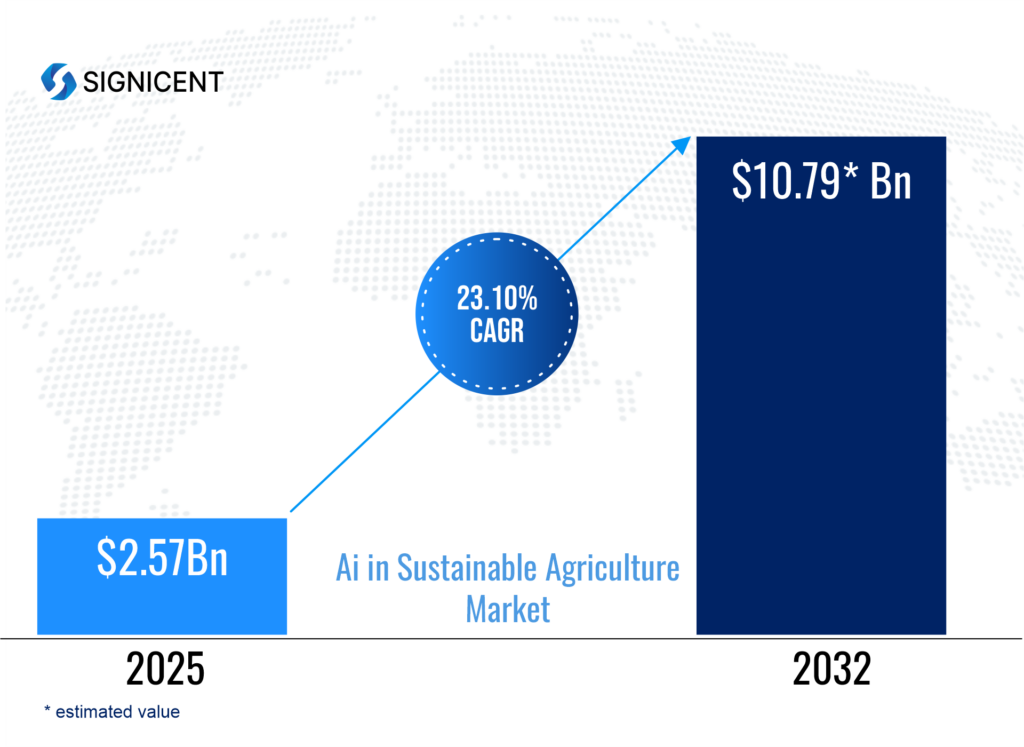
As per Signicent’s Market Research, the AI in Agriculture market is projected to grow rapidly over the coming years. The market size and growth forecast below illustrate the industry’s expanding potential and increasing investment in AI-driven agricultural solutions.
Real-World Examples of Companies Using AI in Agriculture
Several organizations and technology companies are already transforming agriculture using artificial intelligence.
- IBM uses AI and weather analytics to support precision farming and climate forecasting.
- Microsoft is developing AI-powered agricultural platforms that improve farm productivity and resource management.
- FAO supports digital agriculture initiatives focused on food security and sustainability.
- John Deere develops AI-enabled farming equipment for precision agriculture.
- Blue River Technology uses computer vision and machine learning for smart crop management and weed control.
These companies show how AI is already shaping the future of agriculture worldwide.
Future of AI in Food Systems
The future of agriculture will become increasingly technology-driven. AI-powered autonomous farms, robotic harvesting systems, and smart supply chains may soon become common across the world. Vertical farming and indoor agriculture systems are also expected to grow rapidly. AI can optimize lighting, water usage, and environmental conditions for high-efficiency food production.
Future food systems may use AI to prevent global hunger by improving food distribution and predicting supply shortages before they happen. As sustainable agriculture becomes more important, artificial intelligence will likely become one of the most valuable tools for protecting food security and environmental health.
Conclusion
The future of global food systems depends on sustainability, innovation, and smarter resource management. Traditional farming methods alone may not be enough to handle climate change, population growth, and rising food demand. This is why AI in Sustainable Agriculture is emerging as a transformative solution for the modern world.
From precision farming and food waste reduction to climate-resilient agriculture and sustainable nutrition, artificial intelligence is helping create safer and more efficient food systems. While challenges such as technology costs and accessibility still exist, AI continues to offer powerful opportunities for building a healthier and more sustainable future.
AI is not just transforming agriculture; it may become one of humanity’s most important tools for building a sustainable, hunger-free future.
Looking to explore AI-driven innovations in agriculture? Signicent helps organizations with technology intelligence, market research, competitor analysis, and innovation insights to support informed R&D and business decisions. Contact our experts to learn more.
FAQs
What is AI in sustainable agriculture?
AI in sustainable agriculture refers to the use of artificial intelligence technologies to improve farming efficiency, reduce environmental impact, and support long-term food sustainability.
How does AI help reduce food waste?
AI helps reduce food waste through demand forecasting, smart inventory systems, cold chain monitoring, and supply chain optimization.
Can AI improve food security?
Yes. AI can improve food security by increasing crop productivity, predicting climate risks, and improving food distribution systems.
What are the benefits of precision agriculture?
Precision agriculture helps reduce water usage, minimize chemical waste, improve crop health, and increase farming efficiency.
How does AI support climate-resilient farming?
AI supports climate-resilient farming through weather prediction, drought monitoring, satellite analysis, and smart crop management systems.
Is AI replacing farmers?
No. AI is designed to assist farmers by improving decision-making, automation, and farm productivity rather than replacing human expertise completely.