

Introduction
Food processing and agricultural operations generate substantial quantities of by-products, including fruit peels, vegetable pulp, cereal husks, oilseed cakes and spent grains. These materials offer valuable opportunities for producing upcycled ingredients because they often retain nutritional and functional components, even when businesses discard them or use them in low-value applications.
With growing interest in sustainable sourcing and circular manufacturing, the food industry is exploring ways to transform these underutilised resources into commercially valuable ingredients. Advances in food science and processing technologies are making it increasingly possible to recover dietary fibres, proteins, natural pigments, antioxidants, oils and other bioactive compounds.
This approach, known as upcycling, can create new opportunities for upcycled ingredients and sustainable ingredient manufacturing. By converting suitable food and agricultural by-products into commercially useful ingredients, businesses can reduce material losses, diversify raw material sources and support more circular production systems through Ingredient Scouting.
Why Is Food and Agricultural Waste a Growing Industry Challenge?
Food loss and waste are not just environmental concerns; they also represent significant losses of economic value and production resources. The Food and Agriculture Organization of the United Nations (FAO) estimates that food supply chains lose around 13.2% of food after harvest and before retail. Separately, the United Nations Environment Programme (UNEP) estimates in its Food Waste Index Report 2024 that retailers, food service providers and households wasted 19% of the food available to consumers in 2022. These figures represent different stages of the food system and therefore measure distinct aspects of food loss and waste.
These losses involve resources already invested in cultivation, water consumption, energy, transportation, storage and processing.
Several factors contribute to this problem:
- Agricultural residues: Crop stalks, leaves, husks, seeds and rejected produce accumulate during harvesting and processing.
- Food manufacturing by-products: Juice production generates fruit pulp, breweries produce spent grains, and vegetable processing leaves behind peels and fibrous residues.
- Quality and appearance limitations: Retailers may reject fruits and vegetables that do not meet commercial size, shape or appearance standards, even when these products remain suitable for further processing.
- Limited recovery infrastructure: Many processing facilities lack the equipment, technologies and supply-chain partnerships required to recover valuable compounds.
Conventional disposal or low-value utilisation can overlook opportunities to recover useful materials. Developing efficient recovery systems for upcycled ingredients can help businesses extract greater value from existing agricultural resources, provided that the recovered materials are safe, suitable for their intended applications and commercially viable.
What Are Upcycled Ingredients?
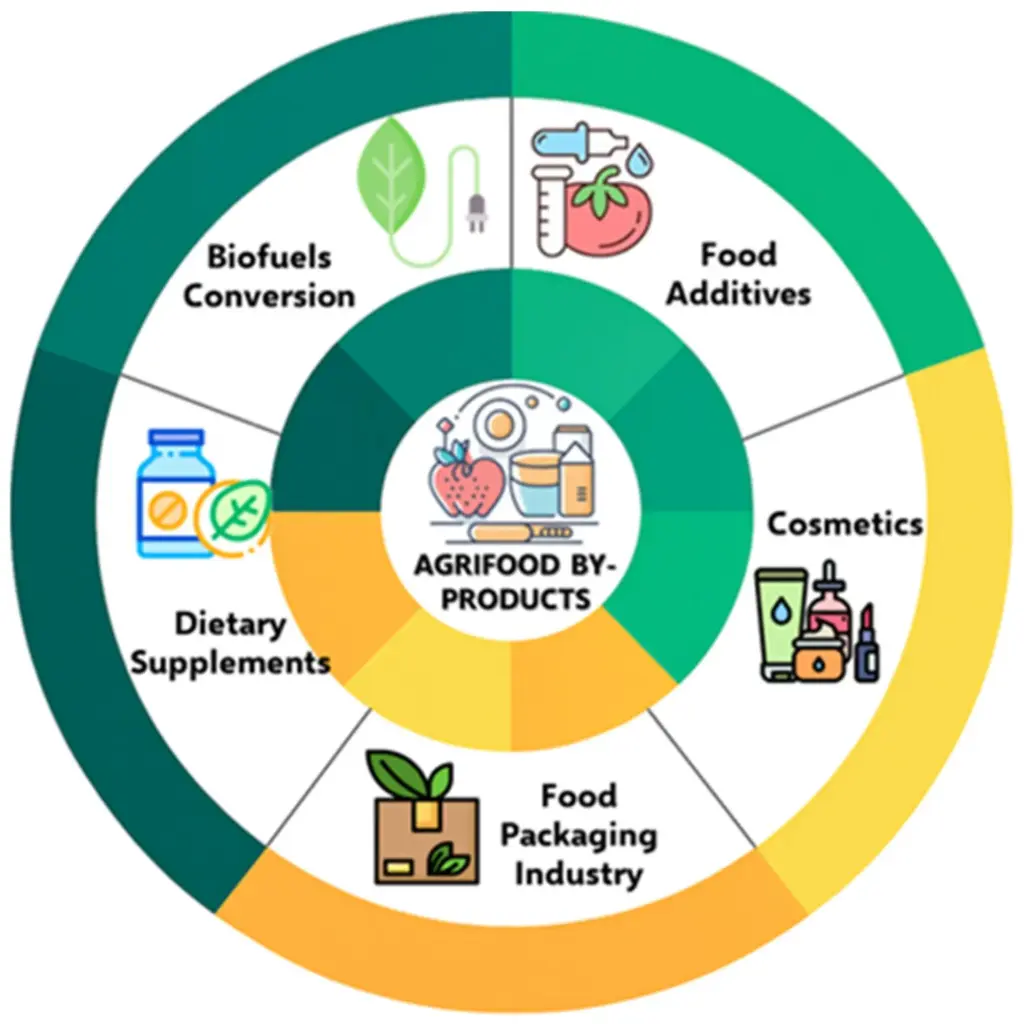
Upcycled ingredients are materials recovered from surplus food, agricultural residues or food-processing by-products and converted into useful ingredients or products that would otherwise have been lost or underutilised. In food-focused definitions, the emphasis is on retaining materials or nutrients for human consumption rather than diverting them to lower-value uses.
Upcycling focuses on recovering underutilised materials and creating products with additional nutritional, functional or commercial value. Businesses may also use the term more broadly to describe by-product valorisation for non-food applications, but they should distinguish these processes from the recovery of ingredients intended for human consumption.
For example, suitable fruit peels can be processed into dietary fibre, pectin or antioxidant-rich extracts, while brewer’s spent grain can be converted into protein- and fibre-rich ingredients. The suitability of each material depends on its source, handling history, composition and intended application.
The process generally involves three stages:
- Collection and segregation: Identifying suitable agricultural residues and food-processing by-products.
- Recovery and processing: Applying suitable technologies to extract, stabilise or transform valuable components.
- Ingredient development: Characterising the recovered material and incorporating it into food, beverage, nutraceutical or other suitable formulations.
The objective is to convert underutilised resources into safe, functional and commercially viable ingredients. For food applications, this requires appropriate sourcing, process controls, analytical characterisation and compliance with the relevant food regulations.
What Valuable Ingredients Can Be Recovered from Food and Agricultural Waste?
Different waste streams contain different nutritional and functional components. Selecting the appropriate recovery pathway depends on the raw material, its composition, the condition in which it is collected and the intended application.
The examples below highlight potential recovery routes for upcycled ingredients; however, businesses must assess each raw material to determine whether they can recover its compounds at food-grade quality and economically viable yields.
| Waste source | Recoverable ingredients | Functional benefits | Functional benefits |
| Citrus peels | Pectin, essential oils, flavonoids | Thickening and stabilisation; flavour and antioxidant potential | Beverages, confectionery, flavourings and nutraceuticals |
| Apple pomace | Dietary fibre, polyphenols | Fibre enrichment; water binding; antioxidant potential | Bakery products, snacks and functional foods |
| Grape pomace | Anthocyanins, polyphenols, fibre | Natural colour; antioxidant potential; fibre enrichment | Beverages, bakery and functional foods |
| Brewer’s spent grain | Protein, dietary fibre | Protein and fibre enrichment; water binding | Snacks, bakery products and protein ingredients |
| Rice bran | Rice bran oil, proteins, antioxidants | Nutritional enrichment; antioxidant potential | Edible oils and functional foods |
| Coffee grounds | Fibres, lipids and selected antioxidant compounds | Potential fibre and lipid recovery; food use requires careful safety assessment | Selected non-food uses and carefully assessed ingredient applications |
| Oilseed cakes | Proteins, fibres and residual oils | Protein enrichment; texture and water-binding functionality | Protein concentrates and food formulations |
| Vegetable peels | Dietary fibre and bioactive compounds | Fibre enrichment; colour and antioxidant potential, depending on source | Fibre ingredients, powders and extracts |
These examples demonstrate how the same agricultural supply chain can support multiple ingredient development pathways through Market Segmentation, depending on the composition of the feedstock and the technologies selected.
For instance, citrus-processing residues can provide pectin for food formulations and essential oils for flavour applications. Similarly, apple pomace can serve as a source of fibre and polyphenols, creating opportunities for fibre-enriched bakery and functional food products.
Analytical testing must establish the nutritional composition, contaminant profile, and suitability of recovered ingredients rather than relying on assumptions based on the original raw material. Recovery yields and functionality can also vary with feedstock variety, season, storage and processing conditions
Technologies Used to Produce Upcycled Ingredients
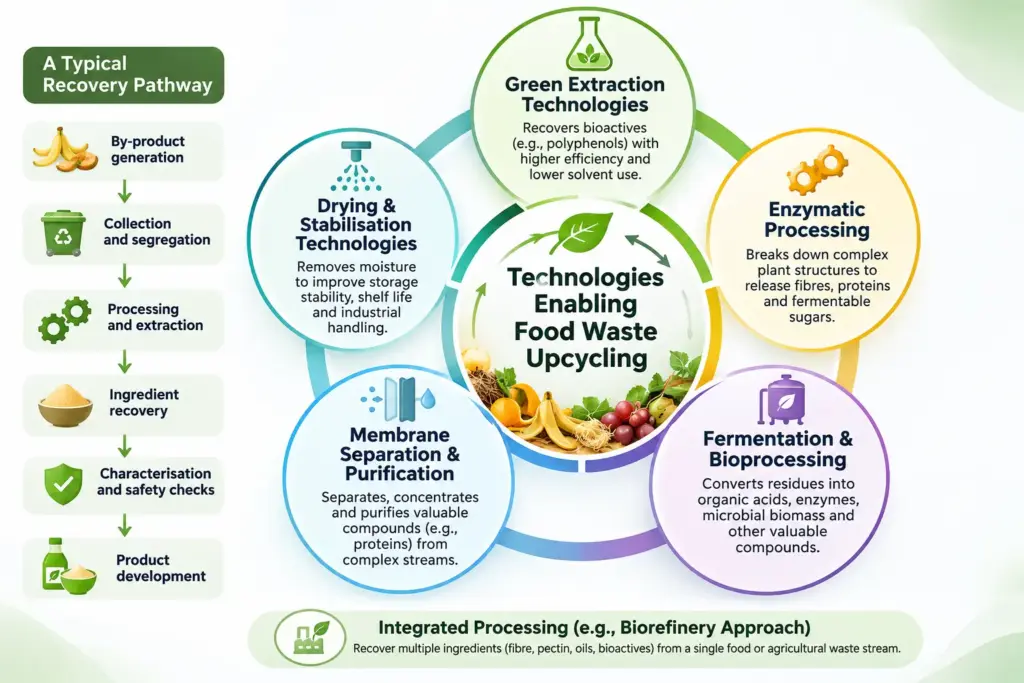
The commercial recovery of valuable ingredients depends on processing technologies that can separate, preserve and improve the functionality of recovered compounds.
Technology selection for New Product Development should consider not only extraction yield but also energy and water use, solvent requirements, product quality, process scale and total production cost.
Several technologies are gaining importance in this area.
1. Green extraction technologies
Ultrasound-assisted extraction, microwave-assisted extraction and supercritical fluid extraction can help recover valuable compounds from plant-based residues. Depending on the feedstock and process design, these techniques may improve extraction efficiency or reduce solvent use and processing time. Their overall environmental benefit must be assessed against energy demand, solvent recovery and other process inputs.
For example, polyphenols and other bioactive compounds can be recovered from grape pomace and fruit peels for further ingredient development. The resulting extracts require characterisation and appropriate safety assessment before use in food or nutraceutical formulations.
2. Enzymatic processing
Enzymes such as cellulases, pectinases and proteases can break down complex plant structures and release valuable components. This approach can improve the recovery of soluble fibres, proteins and fermentable sugars from selected agricultural by-products. Enzyme choice and process conditions depend on the composition of the feedstock and the target ingredient.
3. Fermentation and bioprocessing
Microorganisms can transform food-processing residues into organic acids, enzymes, microbial biomass and other valuable compounds. Fermentation can also modify the functional and sensory characteristics of certain plant-based materials. The process requires control of microbial strains, substrate composition and fermentation conditions.
4. Drying and stabilisation technologies
Recovered residues often contain high moisture levels, making them vulnerable to microbial growth and deterioration. Techniques such as spray drying, freeze drying and controlled dehydration can improve storage stability and support transportation and industrial handling. Drying is a stabilisation step; it does not, by itself, establish food safety or preserve every heat-sensitive compound.
5. Membrane separation and purification
Membrane filtration can help separate, concentrate and purify valuable compounds from complex processing streams. It can be useful when developing higher-purity ingredients, including selected proteins and soluble compounds. Membrane selection depends on molecular size, stream composition, fouling tendency and the required product purity.
Combining these technologies through integrated processing systems can improve resource recovery, enhance the production of upcycled ingredients and support the development of multiple value-added products from a single food or agricultural waste stream.
A biorefinery approach, for example, may recover fibre, pectin, oils and bioactive compounds through successive processing stages rather than targeting only one component.
Where Can Upcycled Ingredients Be Used?
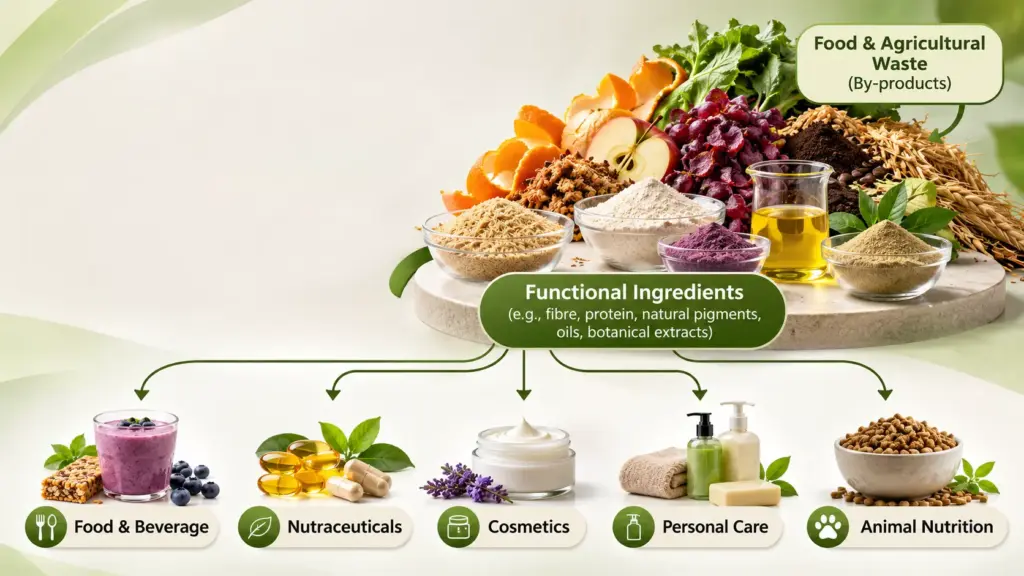
The potential applications of recovered ingredients extend beyond conventional food manufacturing. However, each application has distinct quality, safety and regulatory requirements; Regulatory Monitoring is essential because a material suitable for feed or personal care is not automatically suitable for human food.
- Food and beverages: Fruit fibre, cereal proteins, natural colourants and plant extracts can be incorporated into fibre-enriched bakery products, snacks, beverages and functional food formulations, subject to ingredient functionality and regulatory requirements.
- Nutraceuticals: Antioxidant-rich extracts, dietary fibres and selected bioactive compounds can be developed for specialised nutritional products, provided their identity, safety, composition and permitted claims are established.
- Cosmetics and personal care: Selected agricultural extracts, fruit-derived oils and plant-based antioxidants can be explored for skincare and personal care formulations. Cosmetic-grade specifications and applicable cosmetic regulations must be considered separately from food requirements.
- Animal nutrition: Suitable processing residues can be converted into feed ingredients, provided they meet applicable feed safety, quality and regulatory standards. Feed applications represent a separate valorisation route rather than human-food upcycling.
For manufacturers, these applications create opportunities to diversify ingredient portfolios and establish additional value streams from existing processing operations. The most appropriate route depends on feedstock quality, processing economics, customer requirements and the regulatory status of the final ingredient.
Market Outlook for Upcycled Food Products
The global upcycled food products market is gaining momentum as food manufacturers increasingly explore sustainable sourcing, resource recovery and alternative ingredient development.
Growing interest in Upcycled Ingredients, advancements in ingredient recovery technologies and demand for functional, sustainable food products are creating new opportunities for businesses across the value chain.
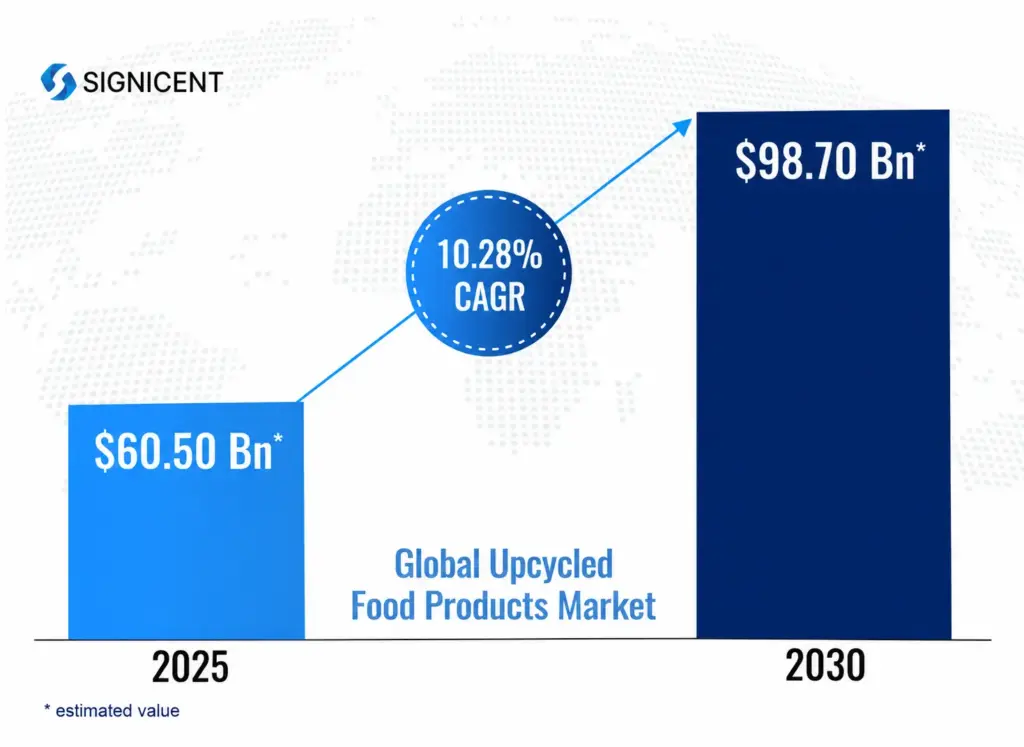
As per Signicent’s market research, the global upcycled food products market is projected to grow at a CAGR of 10.28%, increasing from USD 60.50 billion in 2025 to an estimated USD 98.70 billion by 2030
Key Challenges in Commercialising Upcycled Ingredients
Despite their potential, converting agricultural by-products into market-ready ingredients requires more than developing an effective extraction process. Commercial success depends on reliable sourcing, consistent quality, safe processing and a viable route to market.
Feedstock variability: Agricultural residues vary according to crop variety, growing conditions, harvesting practices and processing methods. This can affect ingredient composition, colour, flavour and functionality. Specifications and incoming quality checks are therefore important.
Food safety and contamination: Residues may contain pesticide residues, heavy metals, mycotoxins or microbial contaminants. Proper sourcing, testing, treatment and traceability are essential before using recovered materials in food formulations. The required controls depend on the material and intended application.
Processing economics: Collection, transportation, drying, extraction and purification can increase production costs. Businesses must evaluate whether the recovered ingredient offers a competitive advantage over conventional alternatives, including through process yield, energy use, labour, capital investment and co-product revenues.
Regulatory compliance: Recovered ingredients must comply with relevant food safety, ingredient approval and labelling requirements in their target markets. In the European Union, a recovered ingredient may require authorisation under the Novel Food Regulation if it meets the regulation’s definition and does not qualify for an applicable exemption. Novel food authorisation is not automatically required for every upcycled ingredient.
Consumer acceptance: Manufacturers must demonstrate product quality, safety, nutritional value and consistent performance. Transparent sourcing and substantiated sustainability claims can help establish market confidence. Claims should be supported by evidence and should not imply environmental benefits that have not been assessed.
Supply chain and feedstock availability: Agricultural by-products are often generated seasonally and across geographically dispersed locations. Reliable collection, segregation, storage and transportation systems are essential to maintain feedstock availability and consistent quality at commercial scale. Addressing these challenges requires collaboration between agricultural producers, food processors, ingredient developers, analytical laboratories and regulatory specialists.
Key Players Transforming the Upcycled Ingredients Industry
These companies are exploring ways to transform agricultural residues and food-processing by-products into valuable ingredients, supporting resource efficiency and creating new opportunities for sustainable product development through Competitor Product Analysis.
Some notable global companies contributing to this industry include:
1. Givaudan (Switzerland) – Upcycled botanical and food-derived ingredients for fragrances, cosmetics and personal care.
2. Symrise (Germany) – Upcycled natural ingredients for food, fragrance and cosmetic applications.
3. Cargill (USA) – Food ingredient innovation, agricultural by-product utilisation and circular sourcing.
4. Barry Callebaut (Switzerland) – Cocoa-fruit and cocoa-processing by-product valorisation.
5. dsm-firmenich (Switzerland / Netherlands) – Food, nutrition, fragrance and cosmetic ingredient innovation.
6. Kaffe Bueno (Denmark) – Coffee by-products converted into ingredients for food, health and personal care.
7. Upcycled Foods, Inc. (USA) – Food-processing by-products converted into functional food ingredients
Future Outlook: From Waste Management to Ingredient Innovation
The future of food and agricultural waste upcycling will increasingly depend on integrated processing, advanced extraction and data-driven resource management.
Biorefinery approaches offer an opportunity to recover multiple components from a single feedstock rather than focusing on one ingredient alone. For example, businesses can process fruit residues through different recovery stages to extract fibre, pectin, pigments and bioactive compounds. This integrated approach can improve resource utilisation, although businesses must assess the feasibility of each recovery step.
Artificial intelligence and process analytics may also help manufacturers monitor feedstock variability, optimise extraction parameters and maintain consistent ingredient quality. These tools can support process monitoring and decision-making, but their value depends on representative data, validated models and integration with production controls.
Commercial research is moving in this direction. In 2026, the US Department of Agriculture’s Agricultural Research Service initiated a project titled ‘Process Engineering and Techno-Economic Validation of Commercially Competitive Ingredients from Food Waste and Processing Byproducts’. The project aims to develop scalable processes for food and feed ingredients, assess functional performance and conduct techno-economic analysis to evaluate commercial feasibility.
For businesses, the opportunity is to move beyond waste disposal and develop scalable ingredient platforms supported by reliable sourcing, validated processing, clear regulatory pathways and demonstrable customer demand.
At Signicent, we help businesses turn complex market and technology information into actionable intelligence. Our services include Market Research & Forecasting, Patent Landscape Analysis, Technology Scouting, Competitive Benchmarking, and Business Intelligence Dashboards to identify product roadmaps, emerging opportunities, GCC potential and business expansion prospects across global markets.
Conclusion
Food and agricultural by-products represent an underutilised resource for the ingredient manufacturing industry. Advances in extraction, enzymatic processing, fermentation and separation technologies enable businesses to transform these materials into valuable sources of proteins, dietary fibres, oils, antioxidants and other functional compounds.
However, the long-term success of upcycled ingredients will depend on establishing reliable feedstock supply chains, ensuring ingredient safety and consistency, and achieving commercial scalability and economic viability.
As the industry moves towards more circular production models, upcycling offers an opportunity to connect waste reduction with ingredient innovation and new value creation.
Frequently Asked Questions (FAQs)
1. What are upcycled ingredients?
Businesses create upcycled ingredients by recovering surplus food, agricultural residues and food-processing by-products and transforming these materials into useful ingredients or products that would otherwise go to waste or remain underutilised. In food applications, businesses focus on retaining their value for human consumption.
2. What are some examples of upcycled food ingredients?
Examples include citrus peel pectin, apple pomace fibre, grape pomace antioxidants, brewer’s spent grain flour and rice bran oil.
3. Which technologies do businesses use to produce upcycled ingredients?
Common technologies include ultrasound-assisted and other extraction methods, enzymatic processing, fermentation, drying, membrane filtration and supercritical fluid extraction. The appropriate method depends on the feedstock and target ingredient.
4. Do upcycled ingredients meet safety requirements for human consumption?
They can be safe when sourced, processed, tested and manufactured under appropriate food safety controls. Contaminant testing, traceability, process validation and regulatory compliance are essential.
5. What industries can benefit from food waste upcycling?
Food and beverage, nutraceutical, cosmetics, personal care and animal nutrition industries can benefit from suitable recovered materials, although each sector has distinct quality and regulatory requirements.
6. How does food waste upcycling support the circular economy?
It helps retain valuable nutrients and materials within productive supply chains, reduces avoidable losses and creates additional value from resources already used in agricultural production
References and Further Reading
• FAO. Food Loss and Food Waste – global estimates and definitions.
• UNEP. Food Waste Index Report 2024.
• European Union. Regulation (EU) 2015/2283 on novel foods.
Editorial note:
The FAO food-loss estimate relates to losses after harvest and before retail.
The UNEP food-waste estimate relates to retail, food service and household levels.
The USDA project description is based on the official ARS project record.