

In recent years, consumer perception around lipstick has shifted dramatically. People no longer look only at colour or brand appeal. Questions around ingredient safety, environmental impact, comfort, and long-term use are now central to purchasing decisions. As clean beauty gains momentum and innovation accelerates, understanding how lipsticks are formulated—and why certain choices are made – has become essential for brands, formulators, and informed consumers alike.
Yet, behind every shade and finish lies a complex formulation story – one that balances beauty, chemistry, safety, comfort, and sustainability. In the fashion and beauty industry, lipstick represents identity. It moves with trends, seasons, and personal stories. As beauty standards evolve, so do expectations.
Today’s consumers want lipsticks that feel good, smell pleasant, stay comfortable for hours, and align with their values—clean ingredients, safety, and sustainability. This emotional connection is what drives innovation in modern lipstick formulations.
This blog explores lipstick formulations from a holistic, end-to-end perspective, examining natural versus synthetic ingredients, performance drivers, safety considerations, and emerging innovations, while also assessing Feasibility & Scalability across modern manufacturing processes and evolving packaging solutions that are shaping the future of lip color.
Understanding Natural and Synthetic Lipstick Formulations
Natural Lipstick Formulations
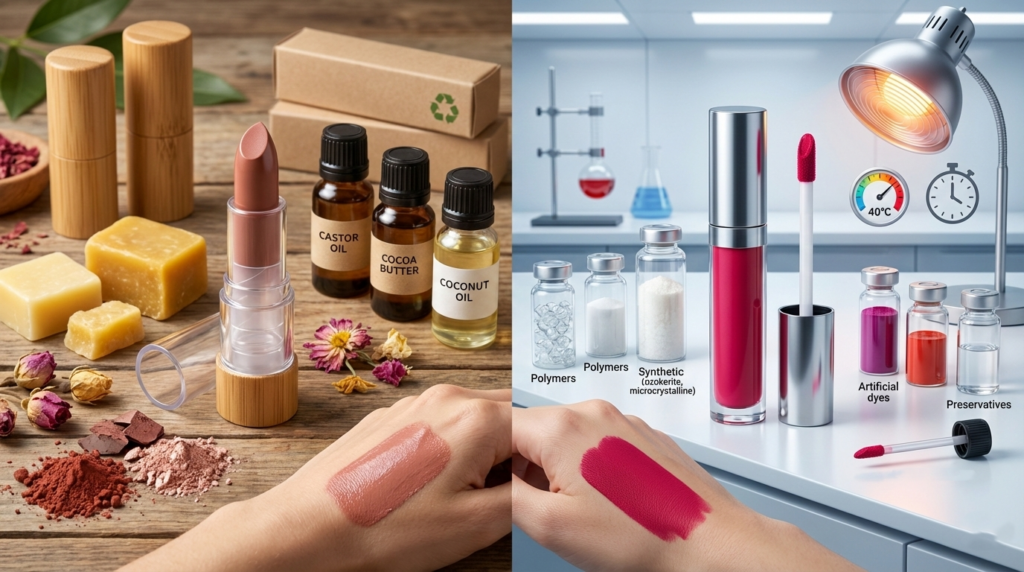
- Formulation foundation: Lipsticks may appear similar at first glance, but differences in ingredient origin, performance on lips, and environmental impact clearly set them apart.
- Natural formulation approach: Developed using plant-based waxes, botanical oils, and mineral pigments, natural lipsticks are appreciated for their comfort, breathability, and sustainability-focused appeal.
- Performance characteristics: These formulations typically offer a softer texture and skin-friendly wear, making them suitable for everyday use and sensitive lips.
- Example brands: INIKA Organic (certified organic vegan lipstick), 100% Pure (cocoa butter matte lipstick with fruit pigments), Zao Organic (45% certified organic ingredients with bamboo refillable cases), Honeybee Gardens (truly natural vegan formulas), and Axiology (zero-waste balmies in compostable tubes).
- Limits of natural systems: Despite their benefits, natural lipsticks often face challenges in achieving intense color payoff, extreme long wear, heat resistance above 40°C, and extended shelf life beyond 18-24 months.
Synthetic Lipstick Formulations
- Synthetic formulation approach: Created using lab-engineered waxes, pigments, polymers, and preservatives, synthetic lipsticks are designed to deliver bold color, transfer resistance, and consistent performance at scale.
- Performance advantages: Their stability across different climates and storage conditions makes them ideal for mass-market and long-wear products.
- Example products: Maybelline SuperStay Matte Ink (liquid lipstick with up to 16-hour wear), MAC Retro Matte (high-pigment synthetic formula), Revlon ColorStay (transfer-proof technology), and Fenty Beauty Stunna Lip Paint (long-wear liquid formula).
- Concerns and scrutiny: Environmental persistence and potential skin sensitivity associated with certain synthetic ingredients have increased regulatory oversight and consumer awareness.
- Rise of hybrid formulations: To address these concerns, modern lipsticks increasingly combine natural oils for comfort with synthetic stabilizers for durability and performance balance.
How are lipsticks chosen and on what basis?
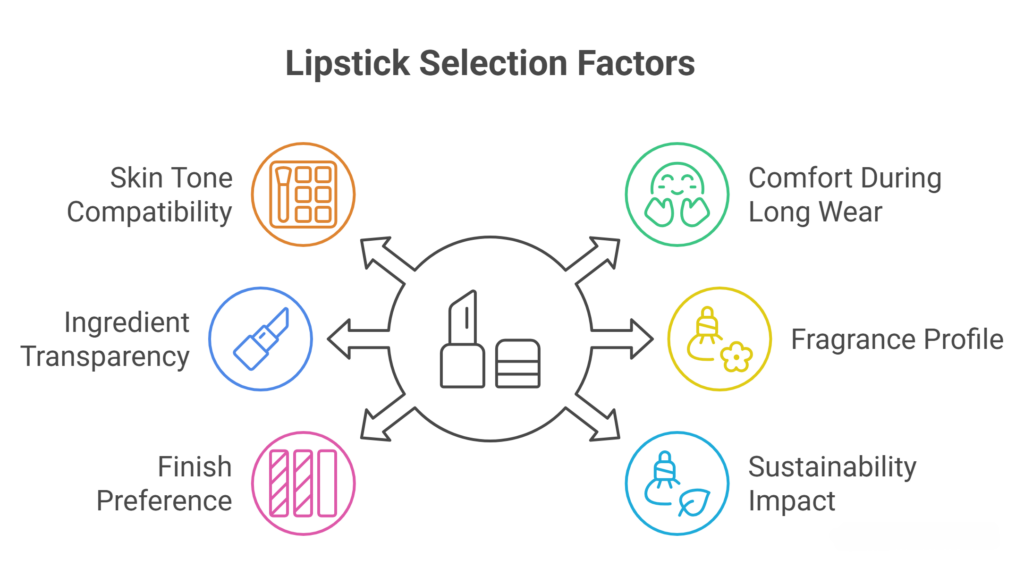
Modern lipstick selection goes far beyond shade preference. Consumers now evaluate products based on multiple factors that combine performance, safety, and ethics.
Lipsticks are commonly chosen based on:
- Skin tone and undertone compatibility – Matching warm, cool, or neutral undertones
- Comfort during long wear – Non-drying, lightweight feel
- Ingredient transparency and safety – Clean labels and recognizable ingredients
- Finish preference – Matte, satin, glossy, or metallic
- Sustainability and packaging impact – Recyclable, refillable, or biodegradable options
How can Natural Lipsticks last longer?
Natural lipsticks are often perceived as short-lasting, but formulation advancements have improved durability significantly.
Longevity in natural lipsticks is achieved through:
- High-melting-point plant wax blends – Combining candelilla (melting point 68-72°C) and carnauba (82-86°C) for enhanced structure
- Oil-to-wax ratio optimization – Typically 35-45% wax content to reduce slipping while maintaining comfort
- Mineral pigment surface treatment – Coating pigments with plant-derived lecithin or silica for better adhesion to lips
- Natural antioxidants – Using vitamin E, rosemary extract, or green tea extract to delay oxidation and color shift
- Natural film-forming agents – Incorporating vegetable-derived polymers that create flexible wear
While they may not match extreme matte wear times, modern natural lipsticks now deliver reliable everyday performance with superior comfort, a balance often highlighted through SWOT Analysis when evaluating formulation trade-offs and consumer expectations.
Major Drawbacks of Traditional Lipstick Formulations
Despite continuous innovation, traditional lipstick formulations still face multiple technical and performance-related challenges that affect comfort, stability, and sustainability.
Key challenges include:
- Dryness and discomfort: High-matte formulations often strip moisture, causing tightness and prolonged lip dryness.
- Shade oxidation: Exposure to air and skin chemistry can trigger color changes after application.
- Heavy metal concerns: Trace metals from certain pigments raise safety and long-term exposure questions.
- Temperature instability: Extreme heat or cold can cause melting, cracking, or uneven application.
- Limited wear adaptability: Many formulas fail to maintain consistency during eating, drinking, or extended wear.
- Environmental persistence: Synthetic ingredients may resist degradation, contributing to long-term environmental impact.
Addressing these formulation gaps has become a central focus for next-generation lipstick innovation.
Natural vs Artificial Lipstick Formulations
| Factor | Natural Lipstick Formulations | Artificial (Synthetic) Lipstick Formulations |
|---|---|---|
| Ingredient source | Plant-derived waxes, botanical oils, mineral pigments | Lab-engineered waxes, pigments, polymers, stabilizers |
| Primary focus | Skin comfort and eco-conscious appeal | Color intensity, durability, and extended shelf life |
| Performance style | Softer texture with breathable wear | Bold color with long-lasting performance |
| Sustainability perception | Higher due to renewable and biodegradable ingredients | Lower due to synthetic material use |
| Formulation stability | Moderate, more sensitive to heat and storage | High, stable across climates and conditions |
| Typical use case | Everyday wear, sensitive lips, clean beauty users | Long-wear products, mass-market applications |
| Industry trend | Growing demand driven by the clean beauty movement | Increasing shift toward cleaner synthetic alternatives |
Types of Lipsticks and Their Style of Elegance
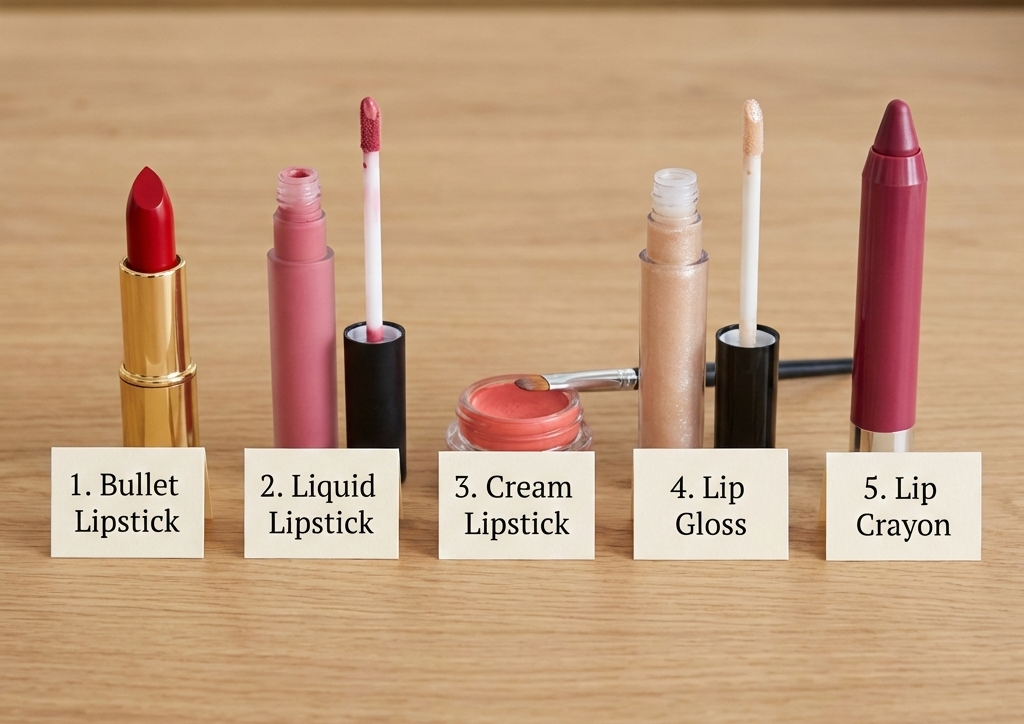
Lipstick formats define both performance and user experience. Each type uses a unique balance of waxes, oils, pigments, and dyes.
Top 5 Lipstick Types
1. Bullet Lipsticks: Classic and elegant, offering a balance between structure and comfort.
- Waxes: Beeswax, carnauba
- Oils: Castor oil, almond oil
- Pigments: Iron oxides, organic dyes
2. Liquid Lipsticks: Known for intense color and long wear.
- Waxes: Minimal
- Oils: Volatile silicones or alternatives
- Pigments: High-load synthetic or treated pigments
3. Cream Lipsticks: Focused on hydration and softness.
- Waxes: Lower concentration
- Oils: Jojoba, shea, avocado
- Pigments: Medium opacity blends
4. Lip Glosses: Designed for shine and nourishment.
- Waxes: Very low
- Oils: High oil content
- Pigments: Low-opacity or pearlescent
5. Lip Crayons: Precision meets portability.
- Waxes: Structured plant or synthetic blends
- Oils: Balanced for glide
- Pigments: Stable color dispersions
Other formats include lip tints, balms, and hybrid lip-care products.
Key Performance Factors That Define User Experience
Today’s consumers are increasingly choosing comfort and wearability over extreme matte finishes, signaling a broader industry shift that brands track closely through Competitor Monitoring to stay aligned with evolving formulation and performance benchmarks.
- Texture and spreadability: Smooth glide without dragging ensures even application and positive first impressions.
- Color payoff accuracy: True-to-shade color with consistent intensity reduces reapplication and improves user satisfaction.
- Comfort during wear: Lightweight, non-drying formulas support long hours of daily use.
- Smudge and transfer control: Resistance to smearing maintains a clean look during eating and speaking.
- Wear consistency: Even color retention over time builds trust in product performance.
New-Age Lipstick Classifications Changing the Industry
Innovation is redefining how lipsticks are categorised, shifting from purely decorative products to intelligent formulations designed around comfort, safety, performance, and personalization.
Emerging Formulation Classes
- pH-adaptive lipsticks: Formulated to interact with individual lip chemistry, creating personalized shades that adapt naturally after application.
- Hybrid lip-care lipsticks: Combine skincare-inspired treatment benefits with color, supporting hydration, repair, and everyday lip health.
- Minimal-allergen formulations: Developed with reduced irritants and simplified ingredient lists to support sensitive and reactive skin types.
- Vegan and cruelty-free systems: Designed without animal-derived ingredients, aligning ethical sourcing with clean and conscious beauty expectations.
- Climate-adaptive lipsticks: Engineered to maintain texture, color stability, and comfort in high heat, humidity, and varying environmental conditions.
Each category delivers distinct benefits while collectively advancing personalization, comfort, and responsible innovation in modern lip color.
Sustainable Packaging and Manufacturing are reshaping Lipstick Formulations
Sustainability is no longer optional—it directly influences formulation decisions.
Manufacturers are rethinking lipstick development through:
- Reduced plastic usage via mono-material packaging that’s easier to recycle
- Refillable lipstick systems to cut waste by up to 85% over product lifetime
- Lower-energy manufacturing processes including cold-process formulations and solar-powered facilities
- Cleaner pigment sourcing with traceability from mine to formula
- Localized sourcing to reduce carbon footprint and support regional agriculture
- Waterless formulations reducing environmental impact and preservative needs
These shifts push formulators to create stable products with fewer materials and smarter design.
Five Key Sustainable Benefits Driving the Shift
Sustainable lipstick formulations offer:
- Reduced environmental footprint – Lower carbon emissions, less water usage, biodegradable ingredients
- Improved long-term skin tolerance – Fewer synthetic irritants, cleaner ingredient profiles
- Renewable ingredient sourcing – Supporting regenerative agriculture and ethical supply chains
- Lower plastic and packaging waste – Refill systems and recyclable materials reducing landfill burden
- Stronger consumer trust and brand loyalty – Transparency building emotional connections with conscious consumers
Market Outlook
The global lipstick market is gaining renewed momentum as beauty brands pivot toward cleaner formulations, enhanced comfort, and sustainable innovation. Growing consumer awareness around ingredient safety, skin sensitivity, and environmental impact is accelerating demand for lipsticks that balance performance with responsibility across mass, premium, and indie beauty segments.
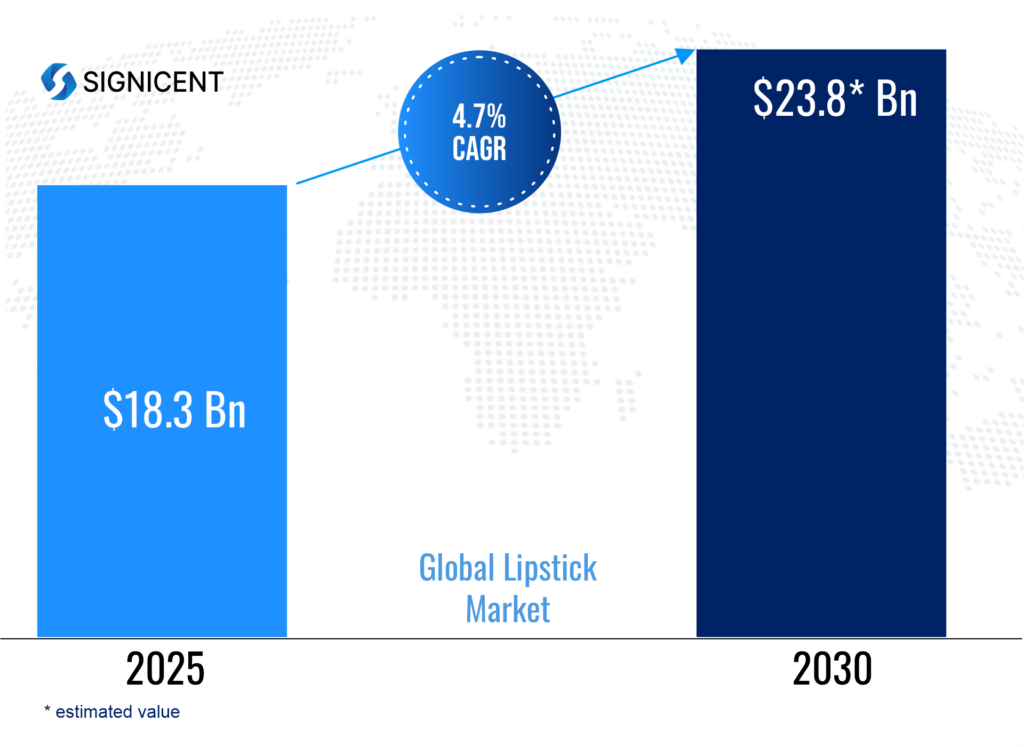
According to Signicent’s market research, the global lipstick market was valued at approximately USD 1.38 Bn in 2025 and is projected to grow at a CAGR of 4.7% through 2030, as highlighted in the following market study.
The global lipstick market is shifting toward:
- Clean-label and hybrid formulations
- Refillable and low-waste packaging
- Personalized shade and finish experiences
- Performance-balanced comfort products
Growth is driven by informed consumers demanding transparency without sacrificing aesthetics.
Key Players Shaping the Lipstick Formulation Ecosystem
Industry leaders include:
- Global cosmetic ingredient suppliers – BASF, Dow, Croda, Givaudan providing innovative raw materials
- Clean beauty and indie brands – Ilia, Kjaer Weis, Axiology pioneering sustainable formulation approaches
- Major cosmetic corporations – L’Oréal, Estée Lauder, Shiseido investing in R&D and clean reformulations
- Sustainable packaging innovators – Albéa, HCT Packaging, Libo Cosmetics developing refillable systems
Together, they are redefining what modern lipstick means across ingredient innovation, formulation of science, packaging design, and ethical standards.
Signicent’s Contribution to Lipstick Innovation
Signicent supports the lipstick and cosmetic sector through:
- Ingredient and formulation trend intelligence
- Sustainability-driven product strategy insights
- Regulatory and safety landscape analysis
- Innovation scouting across clean beauty and packaging
By bridging science, market trends, sustainability, and Supply Chain Analysis, Signicent helps brands future-proof their lip products.
Conclusion: The Future of Lipstick is conscious of Innovation.
Lipstick has grown more than just a cosmetic; it now reflects personal ideals, lifestyle choices, and brand responsibilities. The future of lipstick innovation is in conscious formulations that strike an uncompromising balance between performance, safety, comfort, and sustainability. Whether natural, synthetic, or hybrid, next-generation lipsticks will be smarter, cleaner, and more customizable.
Modern innovation is changing what beauty means: ingredient transparency is becoming a must-have, long-lasting performance is aligning with ethical sourcing, personalisation is scaling through technology, and circular packaging models are reshaping sustainability expectations. At the same time, inclusivity is no longer an option: lip cosmetics must cater to a wide range of skin tones, sensitivities, and expectations.
FAQs on Lipstick
Conscious innovation combines performance, safety, sustainability, and transparency to create lipsticks aligned with modern consumer values and ethics.
Natural lipsticks may suit sensitive users better, but safety depends on ingredient quality, formulation expertise, and regulatory compliance.
Dryness occurs due to high matte pigments, low oil content, or long-wear polymers that reduce moisture retention.
Yes, advanced wax blends and hybrid formulations deliver durability while maintaining comfort and environmentally responsible ingredient choices.
The future favors hybrid, personalized, refillable lipsticks that merge skincare benefits, ethical sourcing, and high-performance color technology.
About Signicent LLP
We assist businesses globally in their technology innovations, R&D, new product development, patents, valuation, product commercialization & market research needs.
Services Offered:
- Patent Landscape
- Patent Portfolio Analysis
- Patent Invalidity Search
- Patent Licensing Services
- Freedom to operate (FTO)
- Chemical Structure Search
- Design Patent Search
- Technology Scouting
- Technology Landscape Analysis
- Technology gap analysis
- Technology Intelligence
- Market Research
- Bio Sequence Search
- Manufacturers Search/ Supplier search
Elevate your Innovation and Research with Signicent’s cutting edge approach to assist you with Technology and Market related matters alongside the IP aspect of the analysis.