

Introduction
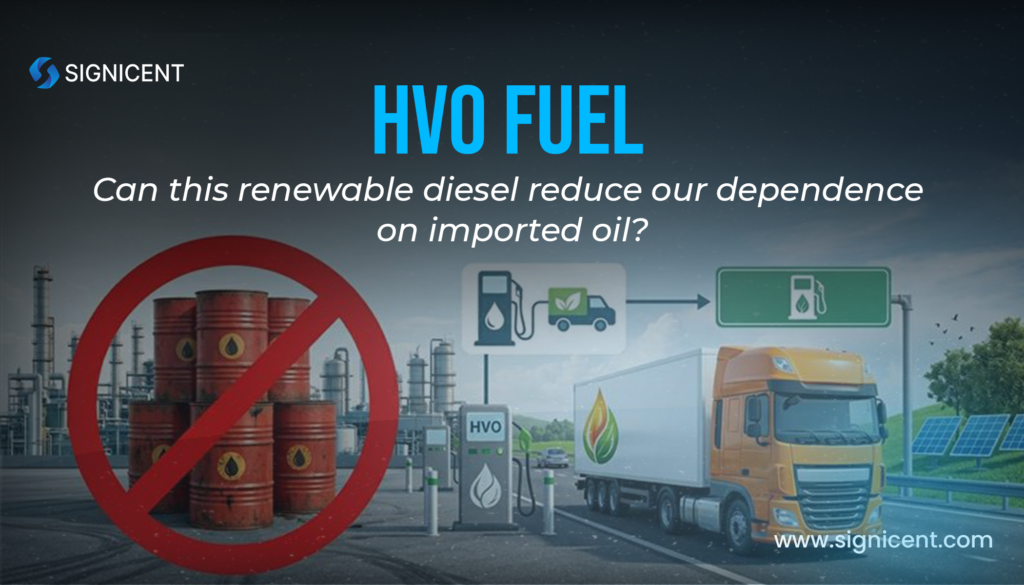
Fuel prices are rising globally, driven by geopolitical tensions, supply disruptions, and growing dependence on fossil fuels. As industries and governments search for immediate solutions, HVO fuel (Hydrotreated Vegetable Oil) is gaining attention as a practical and scalable alternative.
Unlike electric or hydrogen-based solutions that require new infrastructure, HVO fuel works seamlessly with existing diesel engines—making the transition faster and more cost-effective. It not only reduces greenhouse gas emissions but also helps countries reduce reliance on imported crude oil.
At a time when energy security and sustainability are equally critical, HVO fuel is emerging as a powerful bridge between traditional fuels and the future of renewable energy.
Moreover, Signicent can support this transition through advanced technology scouting and data-driven insights, helping identify high-value opportunities and emerging innovations that will shape the future of renewable fuels.
What is HVO Fuel?
HVO fuel, or Hydrotreated Vegetable Oil, is a renewable diesel alternative produced from waste oils, vegetable oils, and animal fats. It is designed to function as a cleaner substitute for conventional diesel without requiring engine modifications.
Unlike traditional biodiesel (Fatty Acid Methyl Ester – FAME), HVO fuel is created through a hydrogen-based refining process, where oxygen is removed from the feedstock using catalytic reactions. This process transforms the raw materials into pure hydrocarbons.
As a result, HVO fuel becomes chemically similar to fossil diesel, but with significantly lower emissions and improved fuel stability. This makes it a more sustainable, high-performance option for modern energy and transportation needs.
Key takeaway:
- Works in existing diesel engines
- Requires no modification
- Significantly reduces emissions
Why HVO Fuel is Emerging as an Alternative to Diesel
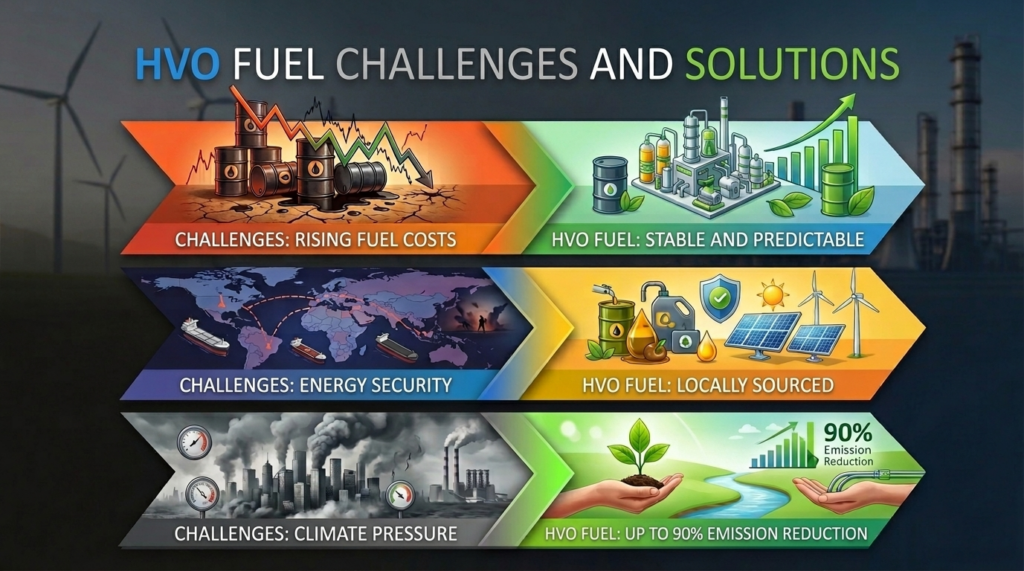
Rising fuel costs, energy security concerns, and climate pressures are accelerating the shift toward HVO fuel globally. Below are the key factors driving this transition:
Rising Fuel Prices:
Global crude oil prices have become increasingly volatile due to geopolitical conflicts, supply chain disruptions, and fluctuating demand. This uncertainty directly impacts transportation, logistics, and industrial operations, increasing overall operational costs.
In this scenario, HVO fuel offers a more stable and predictable alternative, as it is produced from renewable feedstocks rather than being entirely dependent on global crude oil markets. This helps businesses reduce exposure to price fluctuations while maintaining operational efficiency.
Energy Security Concerns:
Many countries rely heavily on imported fossil fuels, making them vulnerable to geopolitical risks and supply disruptions. This dependence creates long-term challenges in ensuring consistent energy availability.
HVO fuel addresses this issue by enabling the use of locally sourced waste oils and renewable materials, helping nations diversify their energy mix. By reducing reliance on imported crude oil, it strengthens energy security and supports domestic fuel production.
Climate Pressure:
Governments and industries are under increasing pressure to meet strict emission targets and reduce their carbon footprint. Traditional diesel contributes significantly to greenhouse gas emissions, making it unsustainable in the long term.
HVO fuel provides an immediate solution by offering up to 90% reduction in lifecycle emissions, without requiring major infrastructure changes. This makes it easier for industries to transition toward low-carbon operations while maintaining performance.
By addressing cost volatility, energy dependence, and environmental impact simultaneously, HVO fuel is emerging as a practical and scalable alternative to conventional diesel, shaping both current and future analysis of sustainable energy solutions.
How HVO Fuel is Made (From Waste to Energy)
HVO fuel is produced using advanced refining technology that converts waste oils and fats into clean, high-performance renewable diesel:
Hydrotreated Vegetable Oil (HVO) is a second-generation biofuel produced through the hydrogenation of vegetable oils and animal fats. This process converts the feedstock into pure hydrocarbons, making HVO fuel chemically similar to fossil diesel, but cleaner and more efficient.
Core Process Steps:
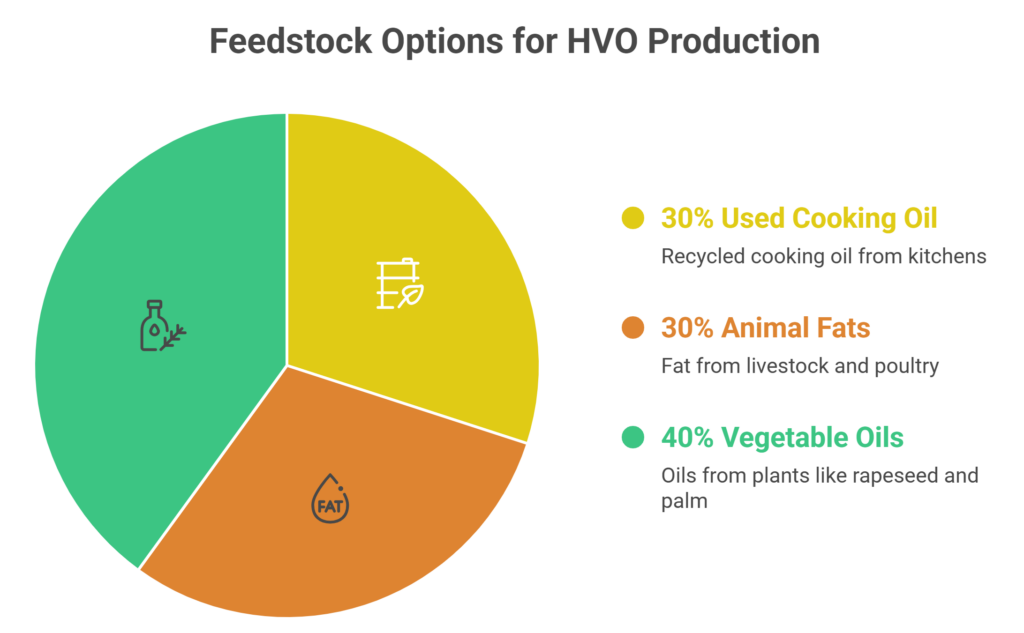
- Feedstock Selection: Used cooking oil, animal fats, or vegetable oils such as rapeseed and palm.
- Hydrotreatment: Reaction with hydrogen under high temperature and pressure using a metal catalyst (nickel, palladium, or platinum).
- Isomerization: Adjusting molecular structure to enhance cold flow performance.
The result is a clean, stable, sulfur-free fuel with high cetane value, improved combustion efficiency, longer storage life, and significantly reduced emissions compared to conventional diesel fuels.
HVO Fuel vs Diesel vs Biodiesel (Which is Better?)
Understanding the differences between HVO fuel, fossil diesel, and biodiesel (FAME) is essential to evaluate performance, sustainability, and long-term usability.
Comparison of Key Fuel Properties
| Parameter | Fossil Diesel | Biodiesel (FAME) | HVO Fuel |
| Emissions | High | Moderate | Very Low |
| CO₂ Reduction | Baseline | 30–40% | 80–90% |
| Engine Compatibility | Full | Partial | Full |
| Cold Performance | Moderate | Poor | Excellent |
| Stability | Moderate | Prone to oxidation | Highly stable |
| Storage Life | 1–2 years | <1 year | >3 years |
Compared to diesel and biodiesel, HVO fuel offers a balanced advantage —combining low emissions, high stability, and full engine compatibility.
Unlike biodiesel, which faces challenges like oxidation and poor cold performance, HVO fuel delivers consistent performance across different climates and storage conditions. At the same time, it significantly reduces environmental impact compared to conventional diesel, making it a more reliable and scalable alternative.
The Need for Cleaner Combustion in the Modern Era
As the demand for e-mobility grows, the reality is that heavy-duty transport and aviation still rely heavily on liquid fuels.
The challenge lies in reducing emissions without disrupting existing infrastructure.
HVO fuel addresses this challenge by delivering immediate emission reductions while maintaining compatibility with existing engines and fuel systems. HVO answers this by:
- Cutting up to 90% CO₂ emissions compared to conventional fossil diesel fuels.
- Operating efficiently in extreme conditions, including cold climates and high-altitude environments.
- Reducing particulate matter (PM) and NOx emissions through cleaner and more complete combustion.
- Being renewable, biodegradable, and non-toxic, supporting environmentally safer fuel alternatives.
With carbon neutrality targets for 2032 approaching, countries such as Germany, the Netherlands, the United States, the United Kingdom, Singapore, and Canada are actively expanding HVO adoption, making competitor monitoring essential to track market movements and emerging renewable fuel strategies.
New-Age Techniques Driving the Adoption of HVO Fuel Over Fossil Fuels
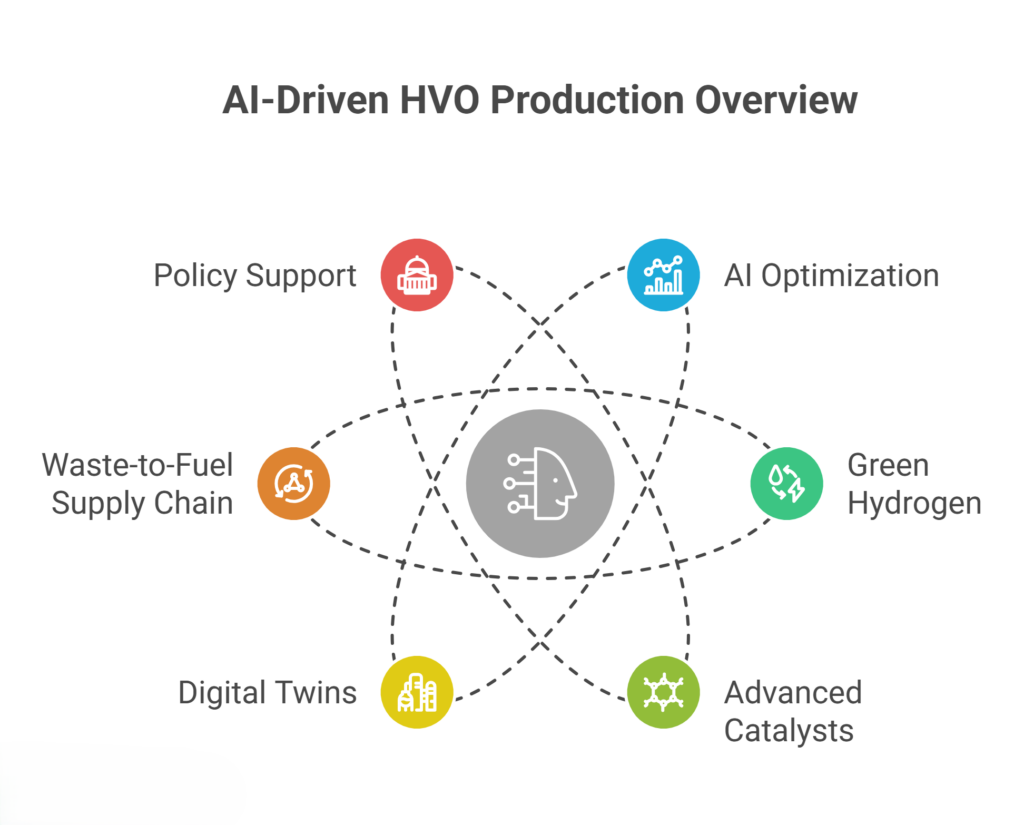
As industries transition toward cleaner energy, several advanced technologies and strategies are accelerating the shift from fossil fuels to HVO fuel. These new-age approaches not only improve efficiency but also make large-scale adoption more practical and cost-effective.
AI-Driven Process Optimization
Artificial Intelligence (AI) is being used to optimize refining processes by predicting feedstock quality, adjusting reaction conditions, and improving fuel yield. This enhances efficiency while reducing operational costs.
Integration of Green Hydrogen
The sustainability of HVO fuel production depends heavily on hydrogen sources. The use of green hydrogen, produced from renewable energy, ensures a lower carbon footprint and supports truly sustainable fuel production.
Advanced Catalyst Development
Innovations in catalyst design are improving reaction efficiency, increasing conversion rates, and extending catalyst lifespan—making HVO production more scalable and economically viable.
Digital Twins and Smart Refineries
Digital twin technology enables real-time simulation of refinery operations, helping reduce downtime, optimize performance, and ensure consistent fuel quality.
Waste-to-Fuel Supply Chain Optimization
Improved collection and processing of waste oils and fats are strengthening feedstock supply chains, making HVO production more sustainable and less dependent on virgin resources.
Policy Support and Blending Mandates
Governments are introducing blending mandates, tax incentives, and regulatory frameworks to encourage the adoption of renewable fuels like HVO, accelerating market growth.
Benefits of HVO Fuel (Why Industries Are Switching)
Environmental Benefits
- Lower Carbon Emissions: Reduces lifecycle CO₂ emissions by up to 90%, helping industries meet sustainability targets and decarbonization goals effectively.
- Reduced Air Pollution: Minimizes particulate matter and NOx emissions, improving air quality and supporting cleaner combustion across transport and industrial applications.
Economic Benefits
- No Engine Modification Costs: Works in existing diesel engines without modifications, eliminating additional investment and enabling immediate adoption across fleets and operations.
- Lower Maintenance Costs: Cleaner combustion reduces engine deposits, lowering wear and tear while decreasing maintenance frequency and operational downtime significantly.
Operational Benefits
- Drop-in Fuel Compatibility: Can directly replace fossil diesel without infrastructure changes, ensuring seamless integration into existing fuel distribution and storage systems.
- Reliable Performance: Delivers consistent performance across climates, including cold conditions, ensuring operational reliability for transportation, aviation, and industrial sectors globally.
How HVO Fuel is Being Used Across Industries
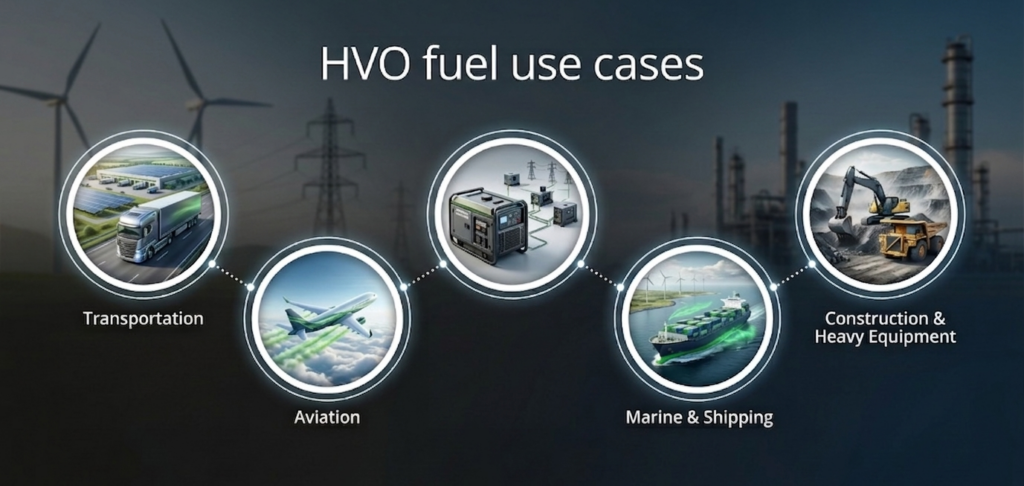
Exploring key HVO fuel uses and renewable diesel applications across transportation, aviation, and power sectors globally.
HVO fuel is already being adopted across multiple industries, offering a practical and scalable alternative to conventional diesel.
Transportation
- Used in trucks, buses, and logistics fleets, enabling immediate emission reductions without engine modifications or infrastructure changes.
Aviation
- Utilized as sustainable aviation fuel (SAF), helping airlines reduce carbon emissions while maintaining performance and fuel efficiency standards.
Power Generation
- Supports backup generators and remote power systems, delivering reliable energy with lower emissions compared to traditional diesel-based solutions.
Marine & Shipping
- Applied in ships and marine vessels, helping meet strict emission regulations while reducing environmental impact in global shipping operations.
Construction & Heavy Equipment
- Powers construction and mining machinery, reducing emissions in high-duty operations without compromising performance or fuel efficiency.
Global Market Outlook for HVO Fuel
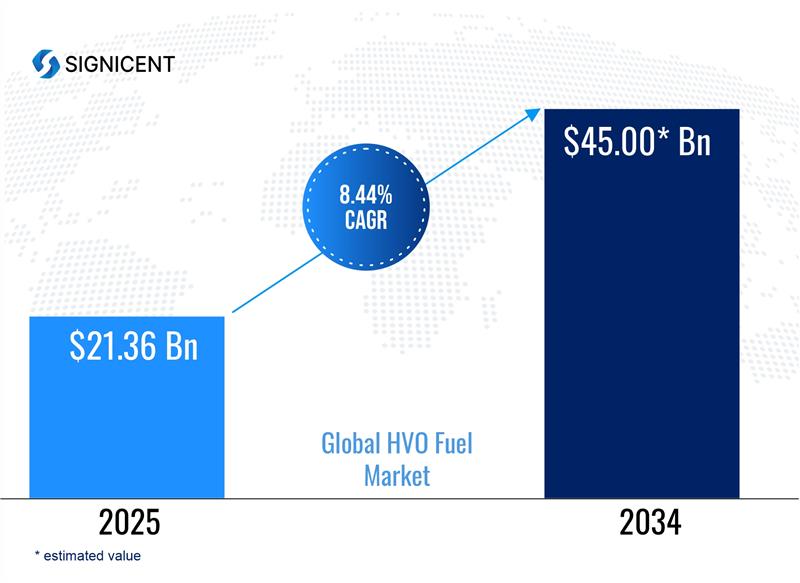
The global HVO fuel market is witnessing strong growth, driven by rising demand for low-carbon fuels and supportive government policies.
According to the IEA (2025), global renewable diesel production capacity exceeds 14 billion liters per year and is expected to double by 2030, reflecting increasing adoption across industries.
According to Signicent’s market research, the global HVO fuel market is projected to grow steadily, with market value expected to reach significant levels in the coming years, driven by policy support, technological advancements, and rising demand for sustainable fuel alternatives.
Key Industry Players:
Leading global companies driving innovation, production, and large-scale adoption of HVO fuel:
- Neste (Finland) – World’s largest HVO producer.
- TotalEnergies (France) – Expanding biorefineries using HVO feedstocks.
- Preem (Sweden) – Pioneering HVO from tall oil (wood industry by-product).
- EcoCeres (Hong Kong) – Converting waste oils into aviation-grade HVO.
- Indian Oil Corporation (India) – Piloting co-processing of vegetable oils in hydrocrackers.
Startups and emerging players across countries such as Singapore, the United States (California), Denmark, Germany, the Netherlands, Canada, and Australia are actively exploring AI-enabled green hydrogen integration to enhance HVO production efficiency and support domestic renewable fuel development.
At Signicent, we empower organizations driving the renewable fuel transition by delivering comprehensive, data-driven insights across the HVO ecosystem. Our expertise includes patent landscape analysis to map global innovations in hydroprocessing, catalyst development, and green hydrogen integration, along with market research and forecasting to identify high-growth regions, evolving policies, and emerging feedstock trends.
We also specialize in the technology landscape, connecting clients with startups and research institutions working on next-generation catalysts and AI-driven process optimization. In addition, our competitive benchmarking capabilities help evaluate the cost-performance dynamics of HVO compared to sustainable aviation fuel (SAF), biodiesel, and e-fuels. Through a combination of IP intelligence and strategic insights, Signicent enables organizations to accelerate R&D, strengthen their innovation pipeline, and capitalize on emerging opportunities in the renewable fuels market.
Future of HVO Fuel (Can It Replace Diesel?)
HVO fuel supports immediate emission reduction, contributing to net-zero goals, but can only partially replace diesel due to feedstock limitations, scalability challenges, and long-term resource availability constraints.
Looking to identify whitespace and gap analysis opportunities in the HVO fuel market? Connect with Signicent for data-driven insights and strategic innovation support.
Conclusion – Time to Rethink Fuel Choices
As fuel prices rise and environmental concerns intensify, the need for practical and sustainable fuel alternatives has become critical. HVO fuel stands out as a cleaner, scalable solution that works with existing infrastructure, requiring no major operational changes while delivering immediate environmental benefits.
However, its widespread adoption is still influenced by key challenges, including limited feedstock availability, high production costs, dependence on green hydrogen, and inconsistent policy frameworks across regions. These factors continue to impact scalability and pricing.
Despite these limitations, ongoing innovations in alternative feedstocks, advanced catalysts, and AI-driven process optimization are steadily improving the feasibility of HVO production.
HVO fuel is not merely an alternative—it is a transition solution bridging current energy systems with a low-carbon future. With continued technological advancements and strategic support, it has the potential to play a significant role in reshaping the global energy landscape.
Frequently Asked Questions (FAQs About HVO Fuel)
What is HVO fuel and how is it different from diesel?
HVO fuel is a renewable diesel made from waste oils and fats. Unlike fossil diesel, it produces lower emissions, offers cleaner combustion, and is more environmentally sustainable.
Is HVO fuel better than biodiesel (FAME)?
Yes, HVO fuel provides better stability, improved cold weather performance, and full engine compatibility compared to traditional biodiesel, which can face oxidation and storage issues.
Can HVO fuel be used in existing diesel engines?
HVO fuel is a drop-in replacement and can be used in most diesel engines without requiring modifications, making it easy to adopt across existing vehicles and equipment.
How does HVO fuel help reduce emissions?
HVO fuel can reduce lifecycle greenhouse gas emissions by up to 90%, while also lowering particulate matter and NOx emissions through cleaner combustion processes.
Why is HVO fuel more expensive than diesel?
HVO fuel is currently more expensive due to limited feedstock availability, higher production costs, and the need for hydrogen-based refining processes.
Can HVO fuel replace diesel completely?
HVO fuel can partially replace diesel, but full replacement depends on feedstock availability, production scalability, and advancements in renewable fuel technologies.